Small claims is designed to be accessible, but a hearing can move quickly. The owner who arrives with hundreds of unsorted screenshots has less usable evidence than the owner who can show what was agreed, what happened, how the amount was calculated, and where each fact appears in the record. Court procedure varies by state and county; prepare the facts first, then follow the instructions for the court handling your case.
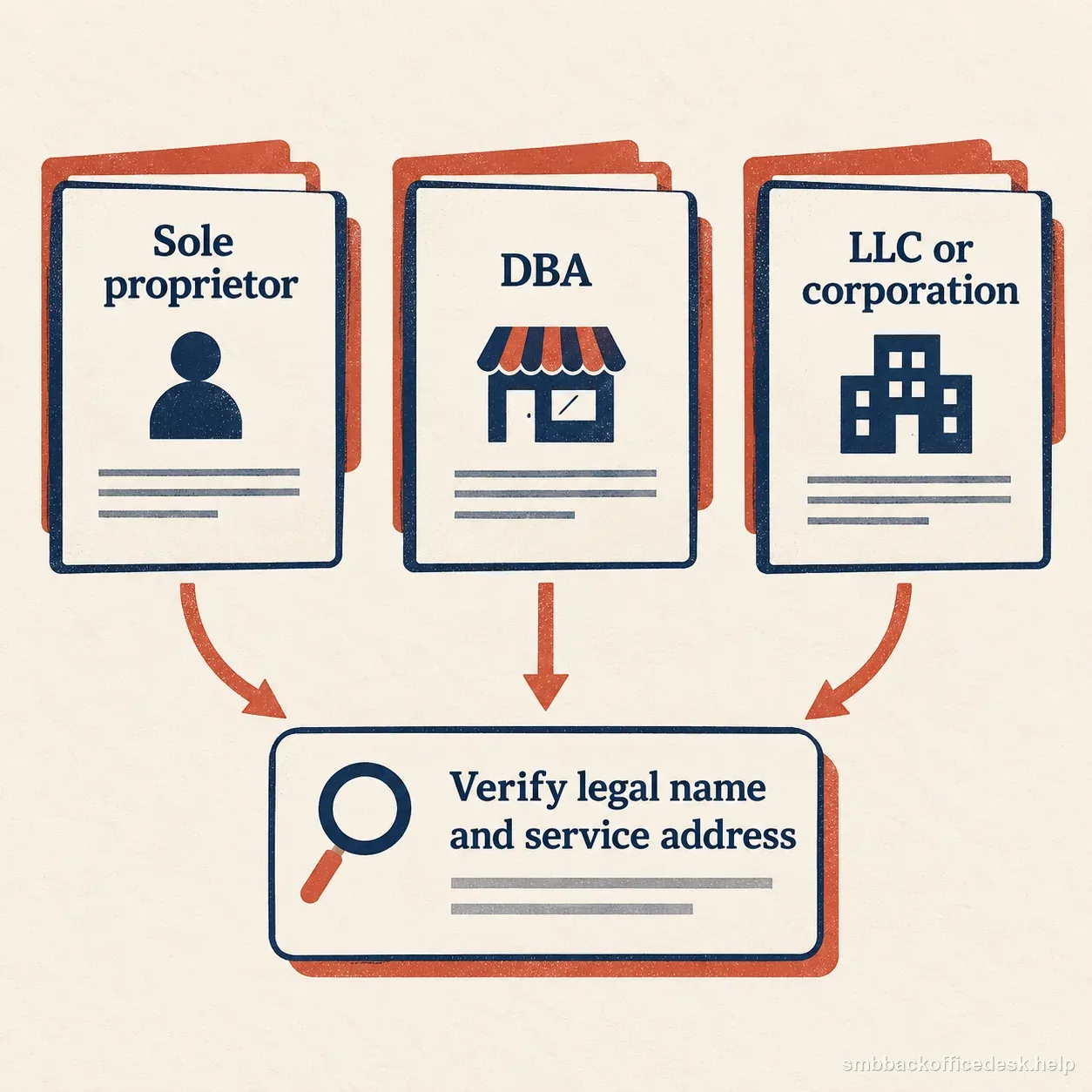
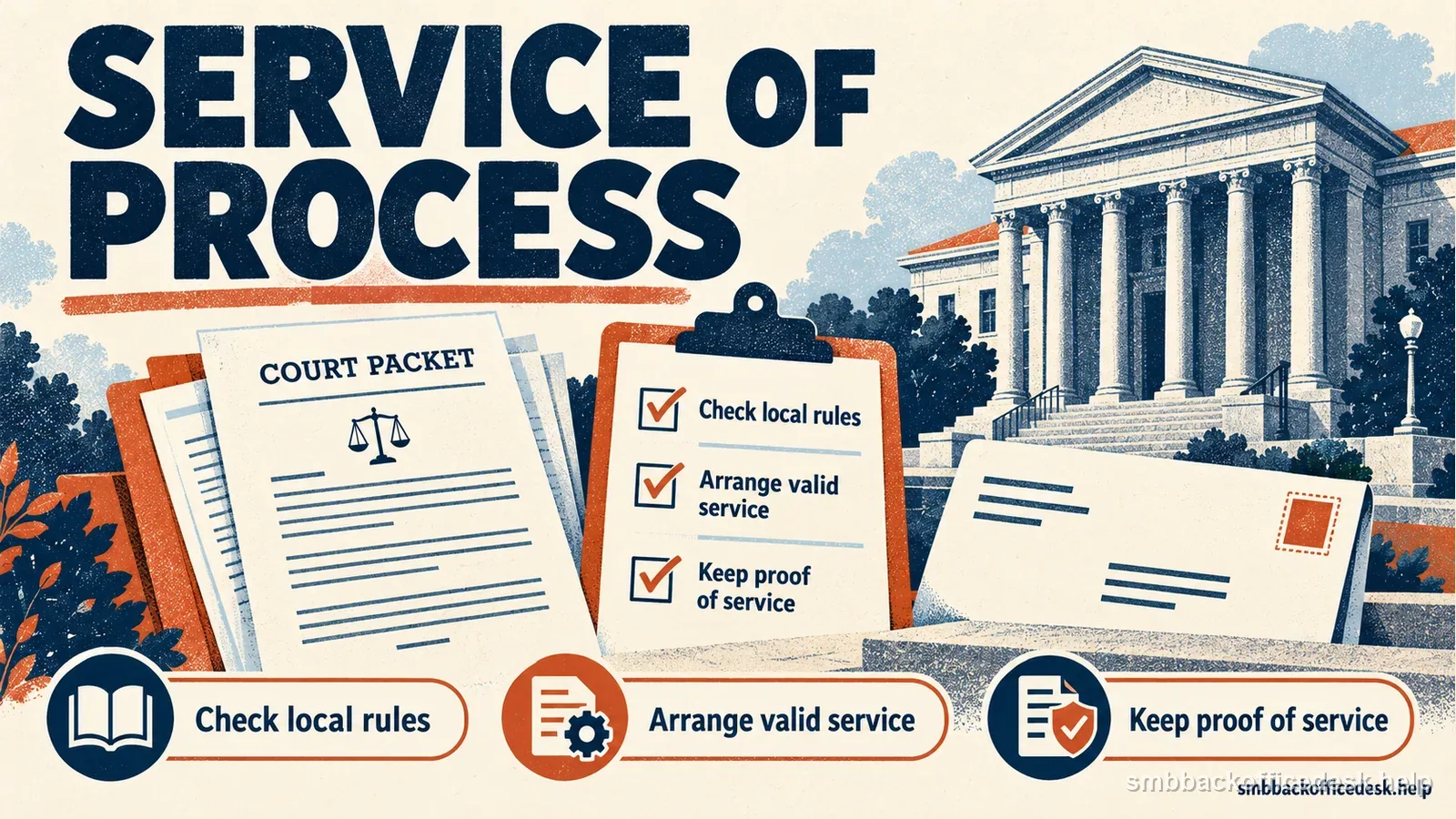
A small-claims hearing begins with confirming notice, service, and the correct legal party.
Confirm the hearing notice and local instructions
Read the full notice and record the case number, date, time, courthouse or remote link, check-in method, and any exhibit-exchange or filing deadline. Confirm that the correct defendant was served and keep the proof of service with your filed papers. If the notice or court website gives different directions, contact the clerk before the deadline rather than guessing.
Check what the court requires for copies, exhibit labels, delivery to the other side, original records, electronic formats, and remote-hearing uploads. California Courts, for example, tells small-claims parties to organize exhibits and prepare copies for themselves, the judge, and the other side; its remote-hearing steps can require contacting the clerk about how evidence must be submitted. These are California directions, not universal rules. Use your own court’s current guidance. New York City Civil Court Rule 208.41, for example, advises parties to produce supporting witnesses, account books, receipts, or other claim documents; that rule is local to that court.
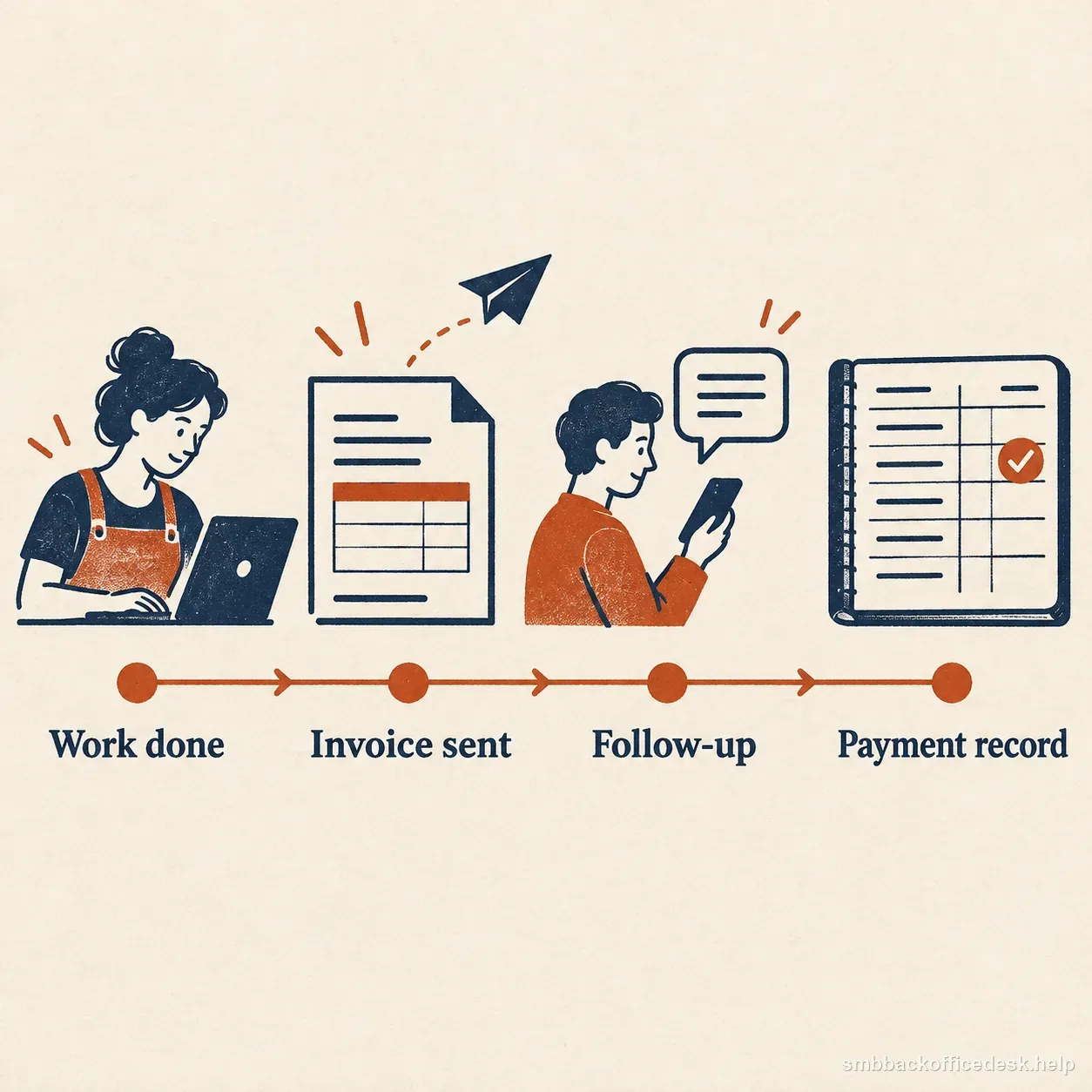
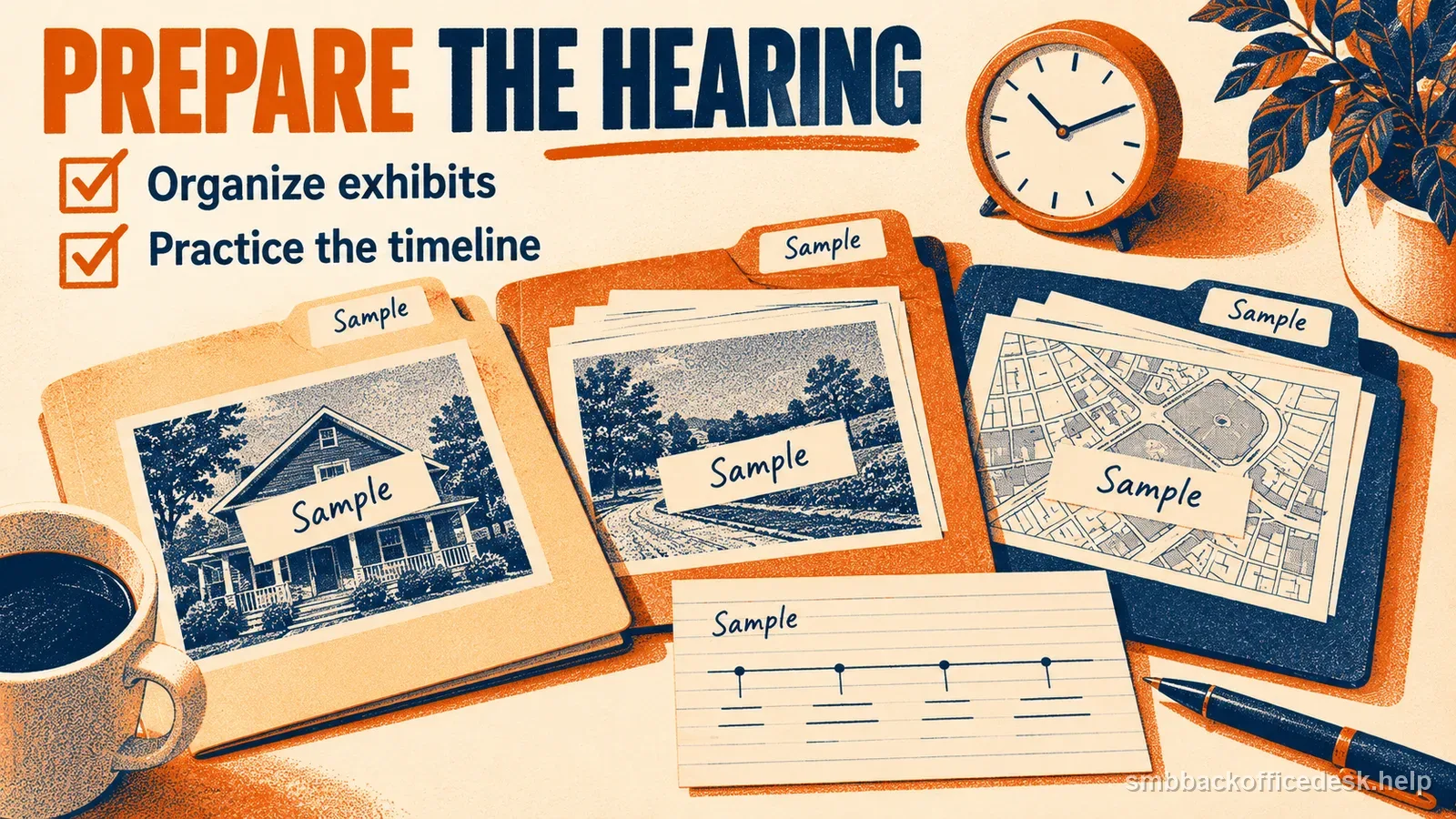
A dated timeline links work, invoice, follow-up, and payment records.
Build a one-page chronology first
Write only dates that matter: - contract accepted and any scope change approved; - work completed, goods delivered, or service period; - invoice sent and payment due; - partial payment, credit, complaint, or cure; - final demand, filing, and service.
Each line should point to an exhibit. If a date does not affect the agreement, performance, payment, or amount requested, leave it out of the main timeline. This chronology becomes your hearing outline and helps you notice gaps before the other side raises them.
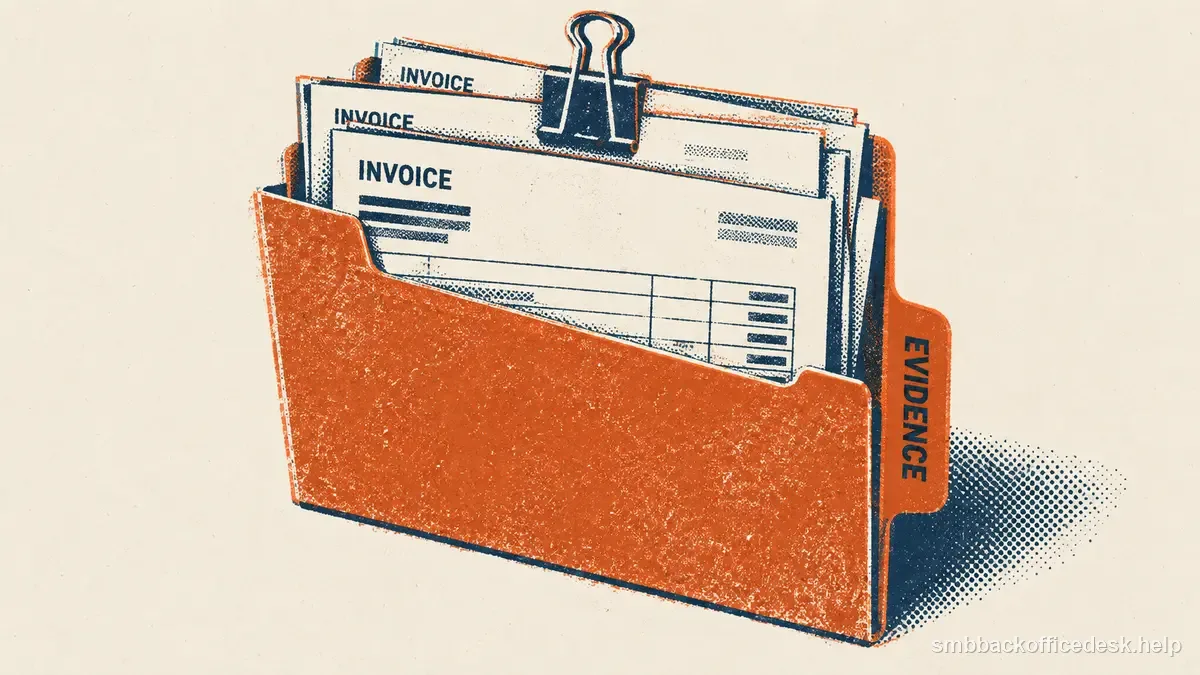
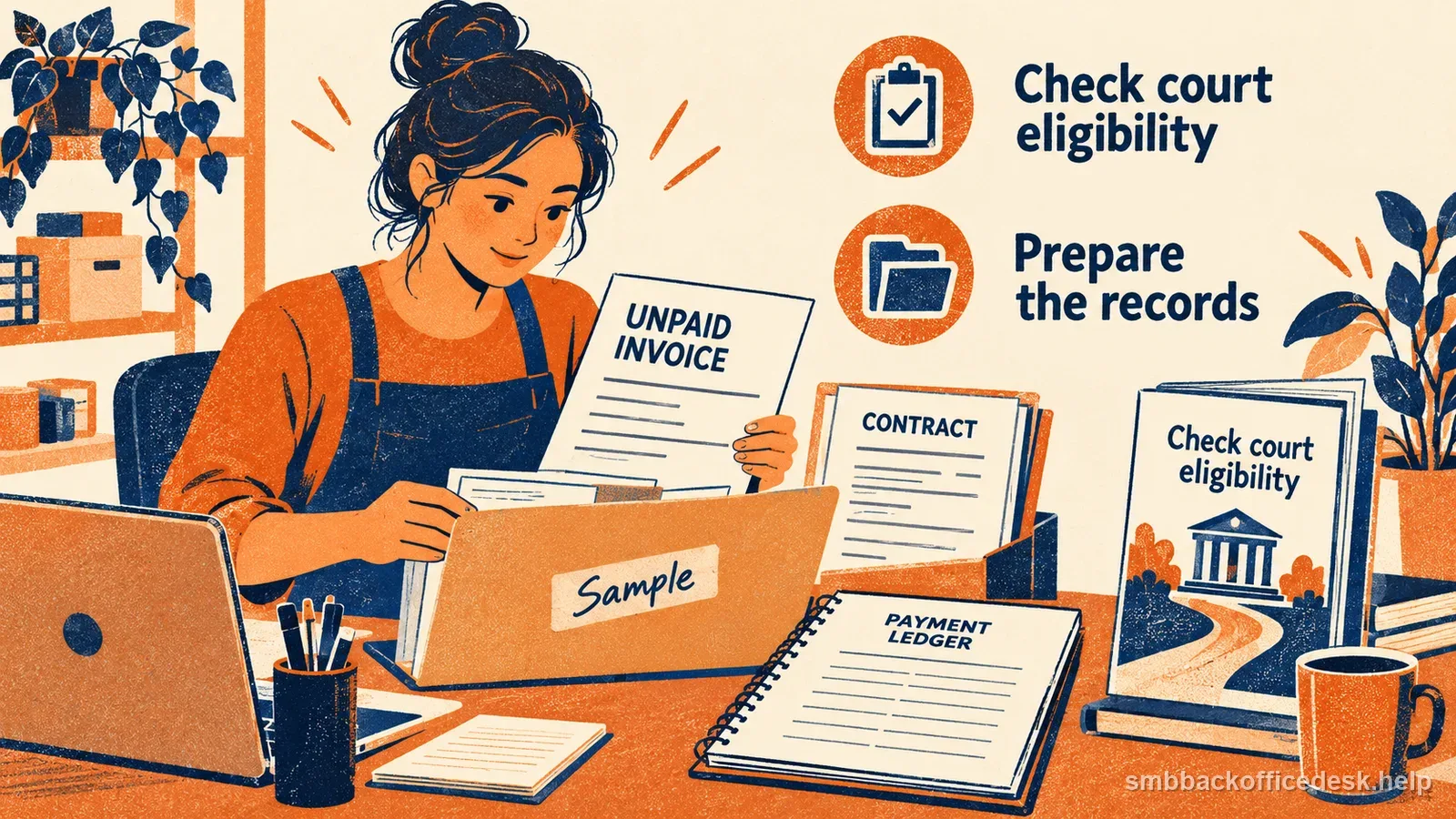
An organized evidence folder makes it easier to locate the invoice and supporting records.
Create an exhibit set that answers the judge’s questions
For an unpaid-invoice case, a practical file may include: (1) contract or accepted quote; (2) authorized change orders; (3) performance or delivery proof; (4) the invoice version actually sent; (5) payment and credit ledger; (6) relevant customer communications; (7) demand letter; and (8) correct-business-identity and service records if contested. The invoice evidence guide explains how to connect each line item to its source and reconcile the balance.
Number exhibits and pages consistently. Use readable screenshots with sender, date, and enough surrounding context to show what the conversation is about. Keep original files or exports available; a court may have its own requirements for presenting a disputed record. Do not assume a file uploaded to a remote-hearing portal is automatically accepted as evidence.
| Liability | Damages | |
|---|---|---|
| Question | Why defendant owes | How much remains due |
| Evidence | Contract, work, acceptance | Invoice, credits, costs |
| Check | Answer likely defense | Judge can reproduce total |
Separate liability proof from the damages calculation
Prepare two short answers: why the defendant owes you, and how you calculated the amount requested. Put agreement, scope, completion, and acceptance proof in the first group. Put principal, payments, credits, any legally permitted interest or fees, and the arithmetic in the second. Keep the ledger and source bank or processor records together. If the other side disputes a payment, show the transaction and settlement dates rather than relying only on the balance in accounting software.
Do not add a fee merely because software calculated it. Bring the contract term or other authority for any amount beyond principal, and check local limits and court costs separately. The judge should be able to reproduce the total from the figures you present.
Prepare for the defendant’s strongest argument
Do not plan only your own story. List the most likely defenses: defective work, delay, unapproved scope, a revised invoice, wrong defendant, a payment already sent, incomplete performance, or filing in the wrong location. Put the record that responds beside each issue. If you cannot support one line item, consider whether to narrow the amount or discuss a resolution instead of overstating the case.
Never hide a damaging email. Assume the defendant may bring it. Read it in context and decide what it actually changes. A concise explanation that acknowledges a real problem is more useful than an unsupported claim that every record is favorable.
Consider settlement as a separate decision
A settlement offer changes the amount, timing, and uncertainty of the dispute, so compare it with the supported claim and the time and cost of continuing. Separate the principal from costs and fees, and state which invoices or line items the offer covers. If payment will be in installments, write each due date and amount; if it is a partial settlement, spell out what remains unresolved. Keep the terms dated and signed or otherwise confirmed by the parties. Ask the clerk what notice or filing the court requires to change the hearing schedule or close the case; a conversation or promise to pay does not itself update the court’s docket. Calendar the agreed dates and keep proof of any payment.
A witness plan should match the facts that documents alone cannot clearly establish.
Decide which witnesses and records you need
If another employee performed the work, ask whether that person has first-hand knowledge of a fact the documents do not clearly establish. Avoid bringing several people to repeat the same point. If a necessary witness or record will not be produced voluntarily, check the court’s subpoena process early; forms, service rules, fees, and deadlines vary. California Courts publishes one small-claims subpoena route, while other courts may use different procedures.
For a remote hearing, confirm how witnesses join, whether they must be in separate locations, and how exhibits are shared. Do not assume a signed statement or a video call replaces whatever the court requires. Ask the clerk about the process if the instructions are unclear.
Rehearse a short opening tied to exhibits
Prepare a brief chronological summary and leave room for questions. For example:
“On May 4 we accepted the service agreement in Exhibit 1. We completed the listed work on June 18, shown by the signed completion record in Exhibit 3. Invoice 1842 for $4,800 was due June 30. The customer paid $1,800 and we issued a $200 credit. Exhibit 5 reconciles the remaining $2,800 principal. Exhibit 6 is the demand and response. We request the supported balance and any costs the court permits.”
Then stop. Let the judge direct the next question. Do not open with insults, a long history of the relationship, or guesses about the defendant’s motives. Practice locating each cited page so you can find it quickly.
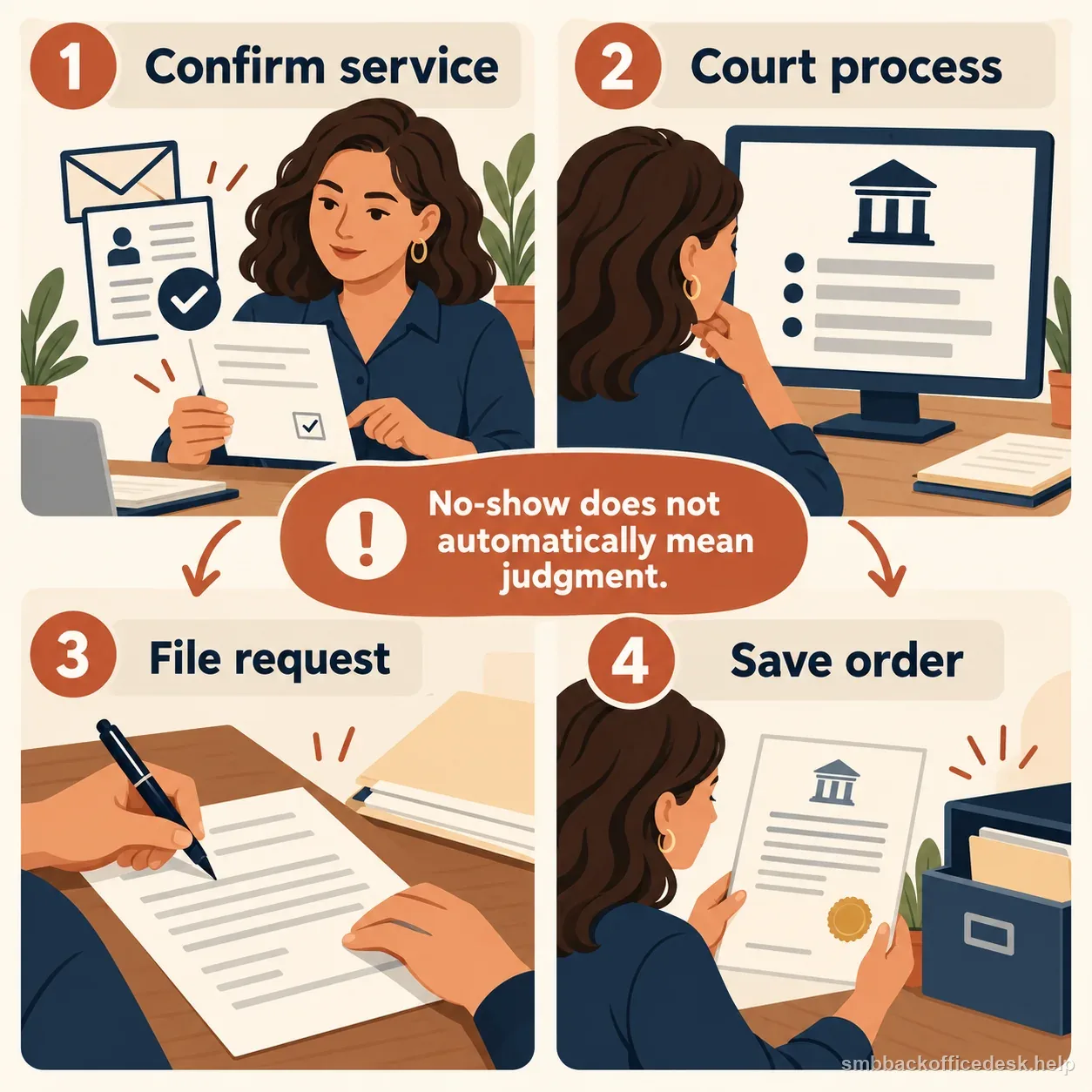
A no-show does not automatically decide the case; be prepared to establish your facts and follow the court’s directions.
Prepare the technology and hearing-day logistics
For an in-person hearing, confirm the courthouse, room, arrival instructions, parking or transit, and any security rules. Bring the case notice, identification, service proof, organized exhibits, a copy for yourself, and a calculator. Ask about an interpreter or disability accommodation as early as the court advises.
For a remote hearing, test the device, camera, microphone, internet connection, and meeting link in advance. Charge the device, keep the court’s phone number available, and have the required exhibits open in the order you plan to use them. Follow the court’s rules about recording, screen sharing, witness presence, and exchanging files; do not record the proceeding unless the court authorizes it.
Join early if the notice directs you to do so. Listen carefully, answer the question asked, and point to the matching exhibit. If the defendant presents a document you have not seen, ask for a moment to read it before responding. If you do not know an answer, say so instead of guessing.
Record what the court decides and check the next deadline
After the hearing, read the written order or judgment and save the date it was entered. If the court orders payment, note the amount, any payment date or stay, and the local process for collecting if the other party does not pay. If you lose or disagree with the result, review the notice and local rules promptly; review or appeal rights and deadlines depend on the jurisdiction and sometimes on which party filed. Do not infer those deadlines from a general online article.
If the other side is absent, do not assume that absence automatically decides the claim; the court may still require you to establish the claim and follow its procedure. A prepared hearing is a short walk through a verified chronology, labeled records, and a recomputable amount—not a demand that the judge sort through a box of documents.