An invoice proves that a business asked for payment. By itself, it does not prove that the customer agreed to every charge or that the work was completed. A useful small-claims packet connects the invoice to the agreement, the performance, the actual payment history, and the balance requested. Court procedures differ by state and county, so use this as a record-preparation method and check the local court's exhibit, filing, and hearing instructions.
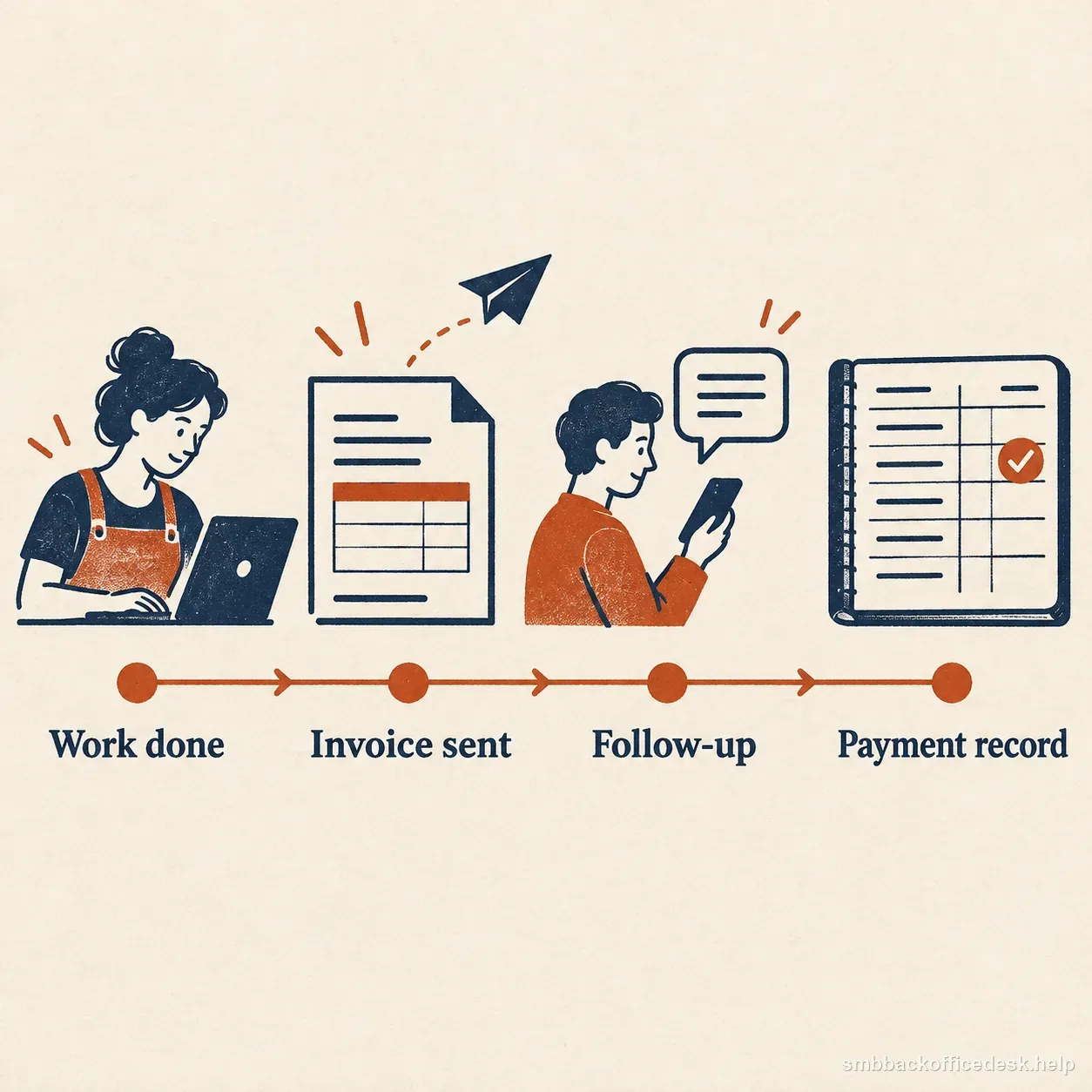
A dated sequence separates the invoice sent, its later correction, and the record explaining the change.
Use the version the customer actually received
Preserve the original invoice PDF with its number, issue date, customer name, line items, taxes if applicable, payment terms, and due date. Keep the email or portal record showing when it was sent and whether it was delivered, rejected, or accepted into the customer's system. A portal timestamp proves a route or receipt event; it does not necessarily prove approval of the work or the debt.
If you later corrected the invoice, keep both versions and explain what changed, when, and why. Do not silently replace the old PDF and present the revised file as if it were the original. A short version note can show which line changed and point to the supporting approval or credit memo.
A judge may ask why the amount in the complaint differs from the first invoice. Your version history should answer that quickly. For a broader unpaid-invoice collection path, see the small-business unpaid-invoice guide.
| Question | Evidence | |
|---|---|---|
| Was invoice sent? | Original PDF | Transmission record |
| Was charge agreed? | Contract | Line approval/change order |
| Was work done? | Delivery | Service record |
| What remains? | Ledger | Payments and credits |
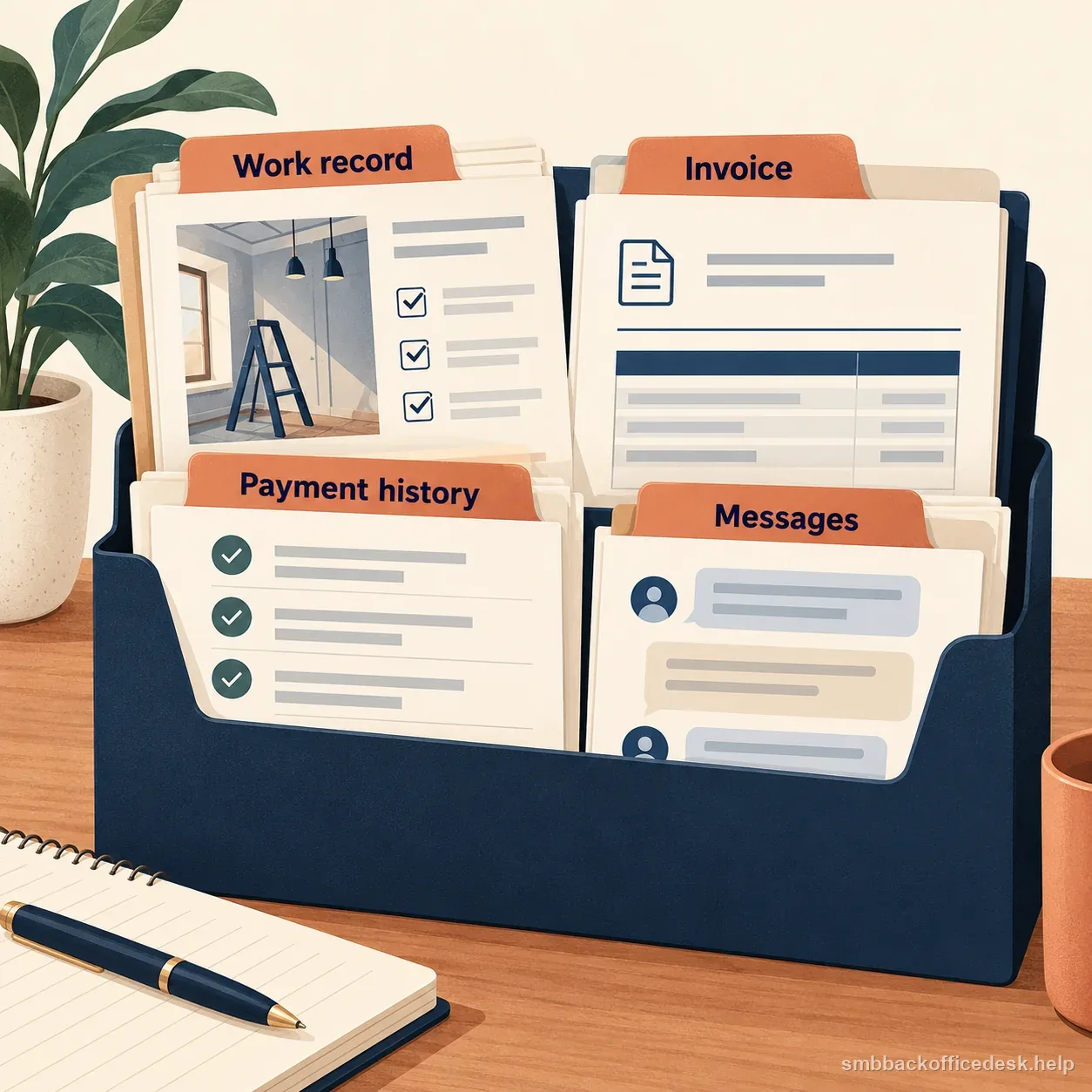
A project record packet pairs the billed work with the invoice, payment history, and customer messages.
Reconcile invoice line items to the agreement
For every amount, identify the record that authorized it: - base contract, quote, or accepted purchase order; - approved milestone or deliverable; - dated time record and applicable rate; - signed or clearly accepted change order; - reimbursable expense and receipt; - tax, late charge, or fee permitted by the agreement and applicable law.
If an invoice says “additional services — $2,400,” the label is not self-proving. Attach the customer's approval that created the extra obligation. If a purchase-order or accounts-payable portal was used, connect the invoice line to the PO or work-order number and preserve any rejection, correction, and accepted resubmission. Portal receipt helps establish delivery; it does not automatically establish that a buyer authorized an out-of-scope item.
For time-based work, prepare a readable summary with dates, task, hours, and rate. Keep the source time entries available if the customer disputes the summary. Do the same for materials: show the quantity, unit price, delivery record, and any return or credit. Avoid asking the court to infer a rate or quantity from a single unexplained total.
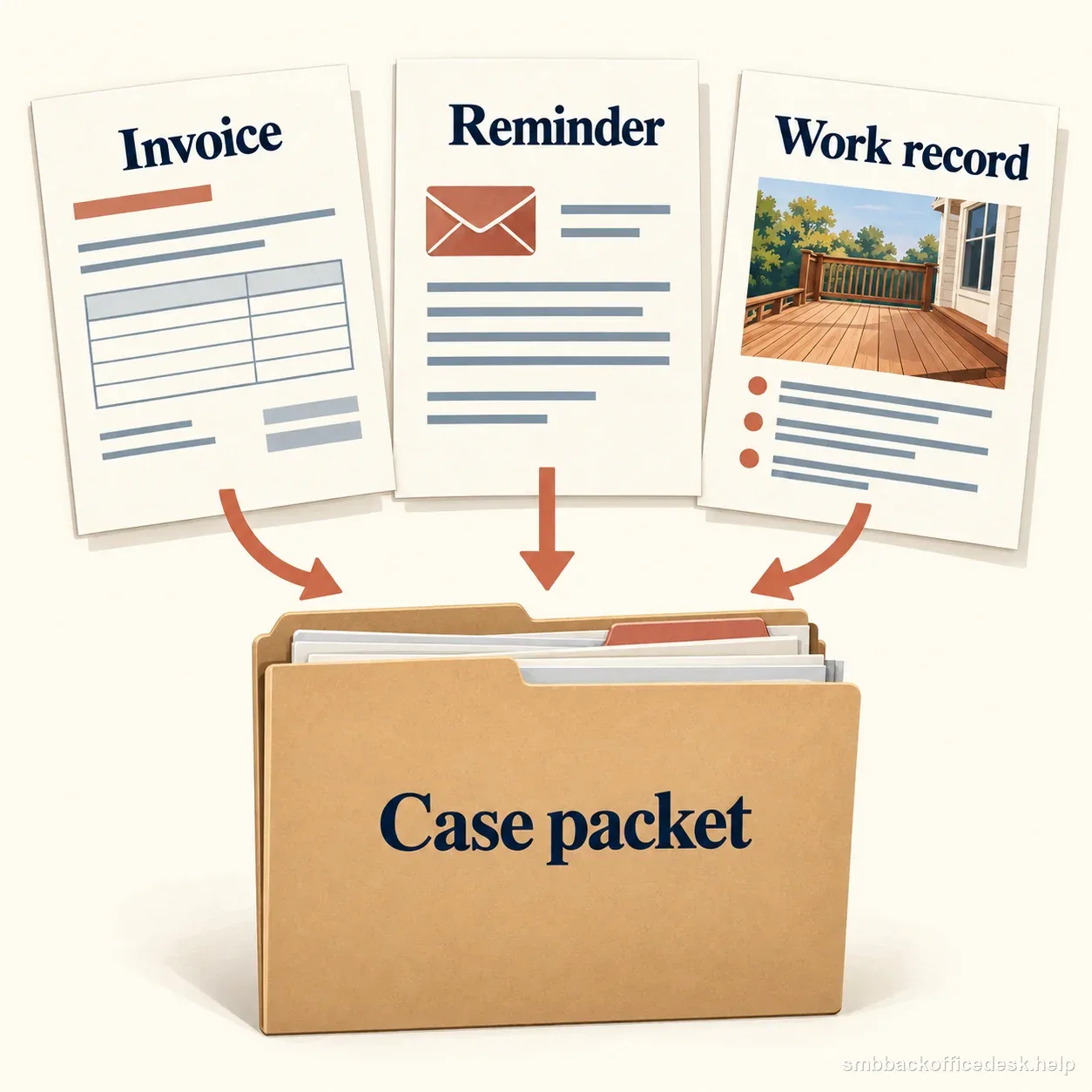
An invoice, customer reminder, and work record are assembled into one clearly labeled case packet.
Build a payment ledger independent of the invoice
Use a separate dated ledger so the requested balance can be recomputed:
| Date | Entry | Debit | Credit | Balance |
|---|---|---|---|---|
| Jun 1 | Invoice 1842 | $4,800 | — | $4,800 |
| Jun 20 | ACH payment | — | $1,800 | $3,000 |
| Jul 5 | Approved credit | — | $200 | $2,800 |
The arithmetic is $4,800 − $1,800 − $200 = $2,800 principal. This is a hypothetical illustration, not a recommended claim amount. Match each payment or credit to bank, processor, or remittance evidence. If a card payment was reversed, show the original payment and reversal separately. Reconcile the customer's gross payment to processor settlement and fees; do not treat a processor fee as a customer credit unless the agreement and applicable law support that treatment.
For multiple invoices, show how each partial payment was allocated. Keep customer remittance instructions, the agreement's allocation term, or your dated allocation record with the ledger. A blank ledger entry does not prove nonpayment if the customer says payment was sent; compare the claim against settlement dates, transaction IDs, and reversals. Redact unrelated account activity as the court instructs, while retaining a complete source statement for your own records.
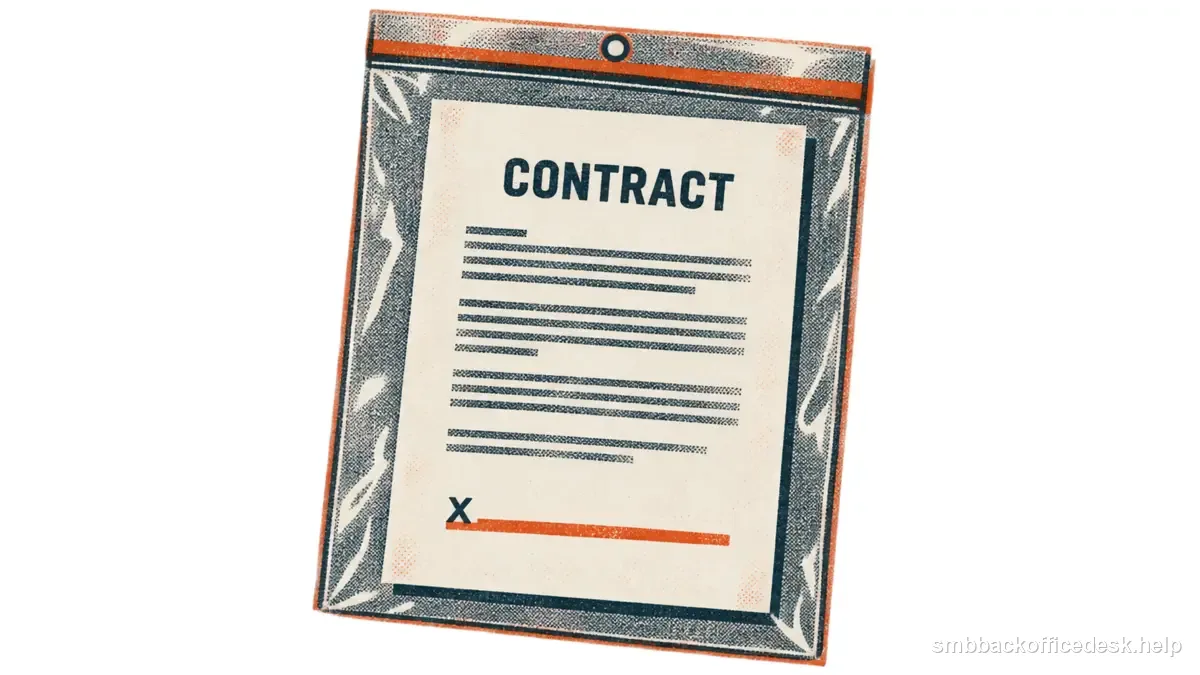
A signed agreement supports the scope and terms behind the billed amount.
Connect the invoice to performance
Attach concise, dated proof that the customer received the benefit: a signed milestone, delivery confirmation, service report, access record, completion photo, accepted file, or email acknowledging receipt. For recurring services, identify the service period and what work occurred during it. A customer may agree that you worked together but dispute which month, location, or unit the invoice covers.
If only part of the invoice is contested, show the disputed lines separately from the undisputed amount. Address the customer's stated reason with the matching record: a change approval for added scope, a delivery record for shipped material, or a completion record for the billed milestone. Precision can support a practical settlement discussion as well as a hearing presentation.
Identify the correct customer and explain the timeline
Use the contract and transaction records to confirm the exact person or legal entity that agreed to pay. A trade name, employee who placed an order, parent company, and entity that received the invoice may not be interchangeable. Keep the accepted quote, signature or approval trail, order record, and any relevant business-entity lookup together. Check the court's rules for naming and serving a business before filing; a good invoice packet cannot cure a case filed against the wrong party.
Make a one-page chronology with the agreement date, approved changes, work or delivery dates, invoice transmission, due date, partial payments, credits, demand, and response. Cite an exhibit number beside each event. If the records conflict, say so and explain which dated record resolves the difference. Do not edit metadata, backdate approvals, or crop away context to make the timeline look cleaner.
Handle late fees, interest, and costs separately
Do not let accounting software turn a $3,000 invoice into a mysterious $3,462.17 demand. If you claim late fees or contractual interest, cite the term that authorizes the charge and show the rate, dates, and calculation separately from principal. Some jurisdictions limit recoverable interest or fees. Filing fees and service costs may follow separate court rules. If the authority is unclear, verify local instructions before including an extra amount.
Preserve customer acknowledgments and disputed messages
A message such as “We will pay invoice 1842 next Friday” can connect the customer to the invoice and timeline. So can a reply that disputes only one line item. Keep the full thread or export with sender, date, surrounding context, and attachments; do not rely on a tightly cropped screenshot that hides who wrote it or when.
A statement is not a substitute for the underlying records. Pair it with the contract, invoice version, delivery or service evidence, and ledger entry it concerns. If the customer says a correction was never accepted, show the original, the revised copy, transmission proof, and reply in sequence. Preserve unfavorable responses too: they help define the actual disagreement and make the presentation more credible.
- AgreementIdentify contract, quote, or order.
- PerformanceShow delivery or service.
- InvoiceUse version sent; preserve revisions.
- PaymentsReconcile dated credits.
- Claim totalMatch ledger to amount requested.
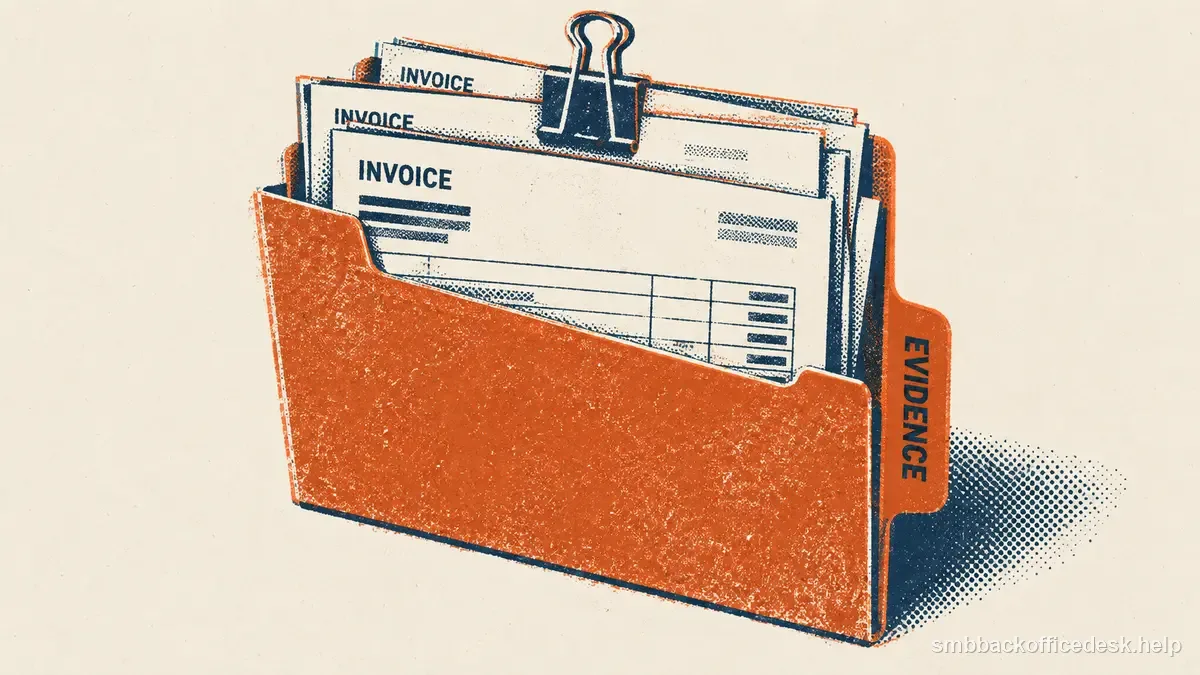
A labeled folder represents the organized documents a party should check against local court directions.
Prepare exhibits for the court that will hear the case
A practical order is: (1) agreement and authorized changes; (2) performance or delivery; (3) invoice actually sent and any revision history; (4) payment-and-credit ledger with source records; (5) demand and full customer response; and (6) the one-page chronology. Number pages consistently and be ready to explain each line in plain language. Keep originals or source exports available, but do not assume the judge will accept every document merely because it is in a packet.
Court procedures are local. California Courts tells small-claims parties to organize the papers and prepare copies for themselves, the judge, and the other side; remote-hearing evidence has its own submission steps. New York City Civil Court Rule 208.41 tells claimants to bring supporting witnesses, account books, receipts, or other documents. Those are examples for the named court systems, not a nationwide exhibit rule. Ask the clerk or check the court's current site for filing deadlines, exchange requirements, electronic formats, copy counts, and whether a witness or certification is needed for a disputed business record.
Before the hearing, rehearse a short explanation: what was agreed, what was done, how the invoice was calculated, what was paid or credited, and exactly what remains. If you need a person or records you cannot obtain voluntarily, check the court's subpoena process early; California Courts describes a small-claims subpoena route, but forms and service deadlines vary. For a related demand-letter workflow, see how to prepare an unpaid-invoice demand. After judgment, the small-claims collection guide covers the separate next step.
The invoice should not stand alone. Its strongest role is as the accounting summary that agrees with the accepted obligation, the documented work, and the payment record.