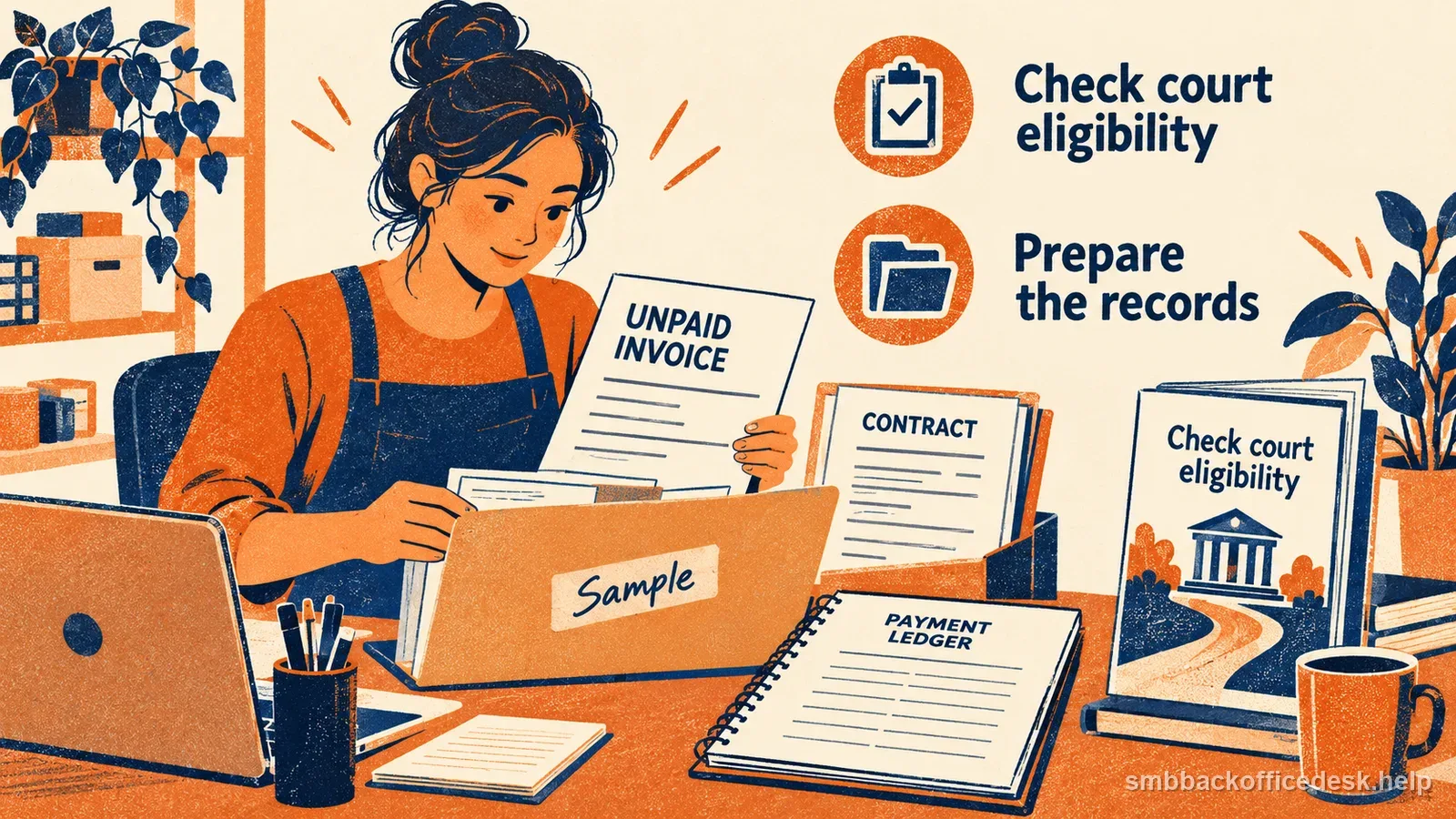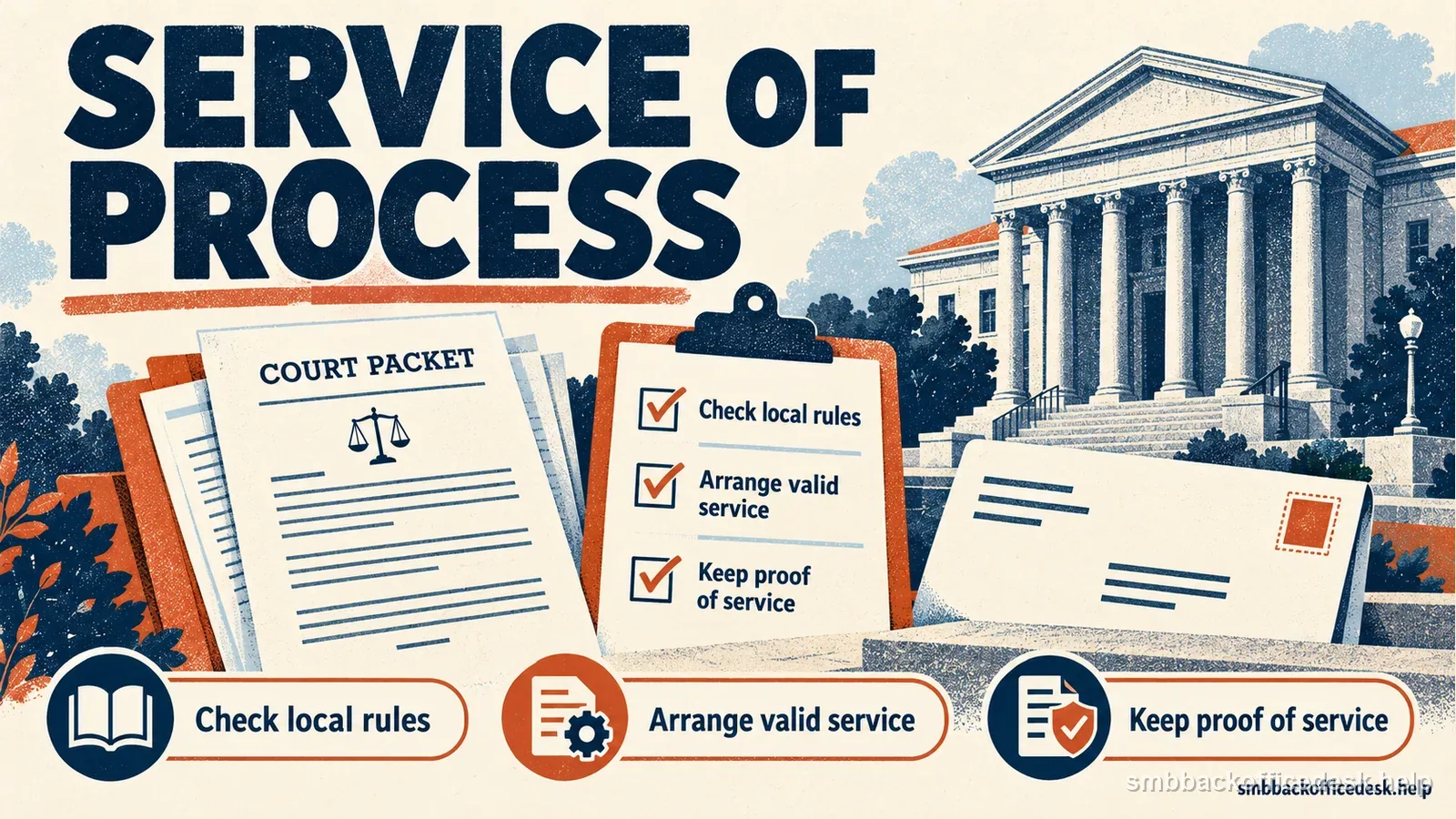
Service of process is not the same as “the customer knows about the lawsuit.” Courts prescribe how a filed claim must be delivered, who may deliver it, who may receive it, and when proof must be filed. A case with excellent invoice evidence can be postponed or dismissed if service is defective.
Read the service page for the exact court and defendant type
Rules differ for individuals, corporations, LLCs, public entities, and defendants outside the state. Start with the official court instructions after you file.
California’s current small-claims guide says the plaintiff cannot serve the forms personally. A server must be at least 18. It describes personal service, substituted service, and—in courts that offer it—certified-mail service by the clerk. California also publishes SC-104 as the Proof of Service and SC-104C with guidance for serving a business or public entity.
Those are California examples, not nationwide forms.
Identify the person who can receive service
For an individual defendant, personal service commonly means handing papers to that person.
For an LLC or corporation, check the state registry and the court’s instructions for serving a registered agent, officer, or other authorized person. Do not give the papers to a random employee and assume the requirement is satisfied.
For a sole proprietor using a trade name, the individual behind the business may need to be served under local rules.
Give the server the exact legal defendant name, not merely the storefront name.
| Defendant or situation | Who to serve | Caution from the guide |
|---|---|---|
| Individual | Personal service, commonly handing the papers to that person | Follow the court's official instructions for the exact method |
| LLC or corporation | The registered agent, an officer, or another authorized person under the state registry and the court's instructions | Do not give the papers to a random employee and assume the requirement is met |
| Sole proprietor using a trade name | The individual behind the business may need to be served under local rules | Give the server the exact legal name, not the storefront name |
| Agent or address changed | Check the current registry record again and ask the clerk which date controls | Do not rely on an old invoice address, a former agent, or a manager as a substitute |
| Dissolved entity or no usable agent | Verify the court's official procedure for that situation | Some courts require a motion, another authorized recipient, or a new hearing date |
| Certified mail | Only where the court permits it, and sometimes only when the clerk sends it or a particular person signs | A tracked demand letter proves notice, not automatically valid service |
Calculate the deadline backward from the hearing
The service deadline is often tied to the trial date and can be earlier for substituted service than personal service. Determine the deadline immediately after receiving the hearing date.
Do not wait until the final week to start. Businesses move, registered agents change addresses, and employees refuse papers.
Set an internal deadline earlier than the legal deadline so there is time for another method if the first attempt fails.
- Hearing dateRead rule for defendant type.
- ImmediatelyIdentify recipient; set early internal date.
- AttemptRecord address, method, result, server.
- Before deadlineFile proof matching actual service.
- FailureUse local method or time-extension procedure.
Keep an attempt log
For each attempt, record: - date/time; - address; - method attempted; - person encountered; - result; - server; - next planned step.
Your process server may keep its own log, but the business should retain the reports. Failed attempts can matter when deciding whether an alternative method is available.
Do not coach a server to misstate who they are or trespass. Use lawful professional service if the defendant is evasive.
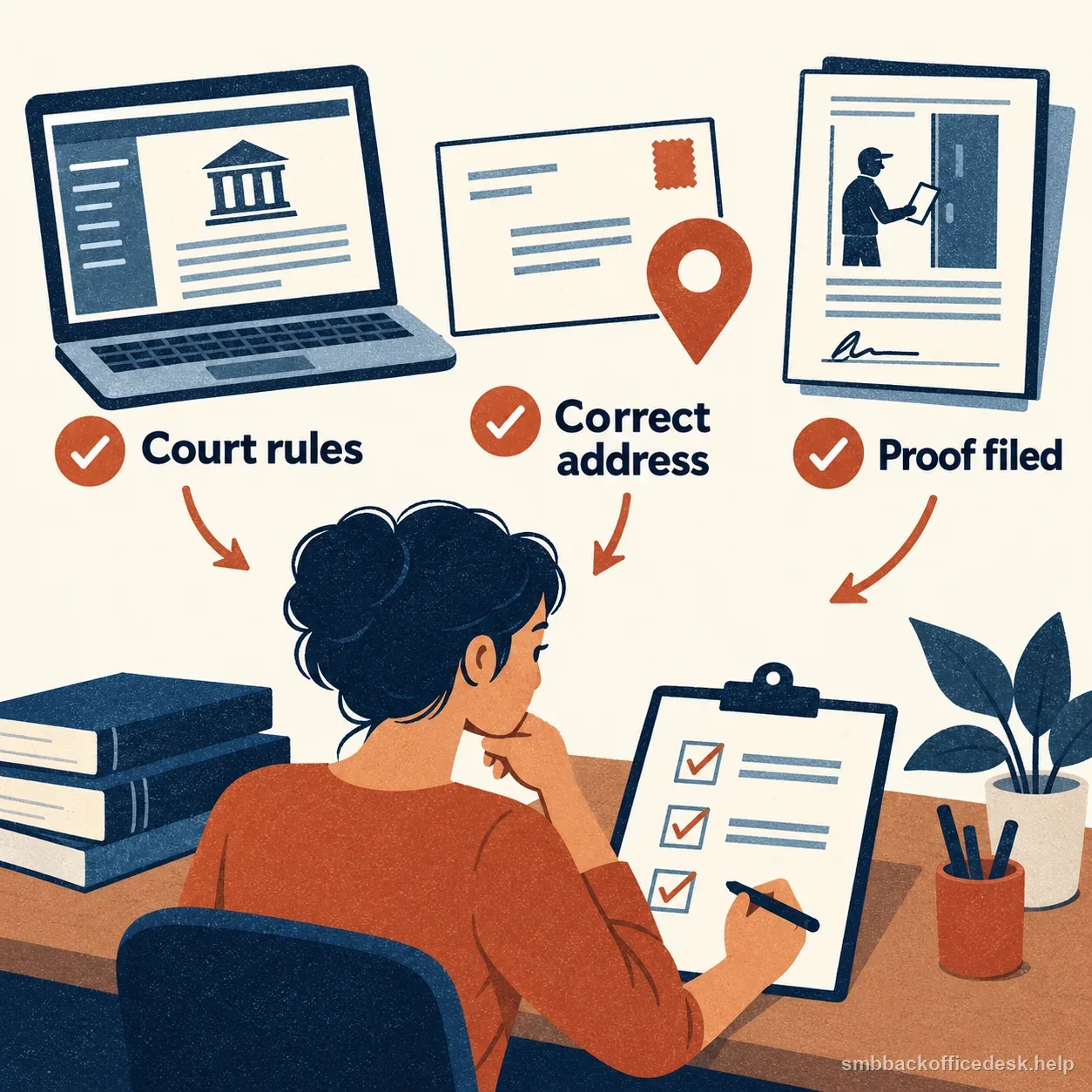
A small-claims plaintiff checks the court instructions, recipient address, and filed proof of service before tracking a response deadline.
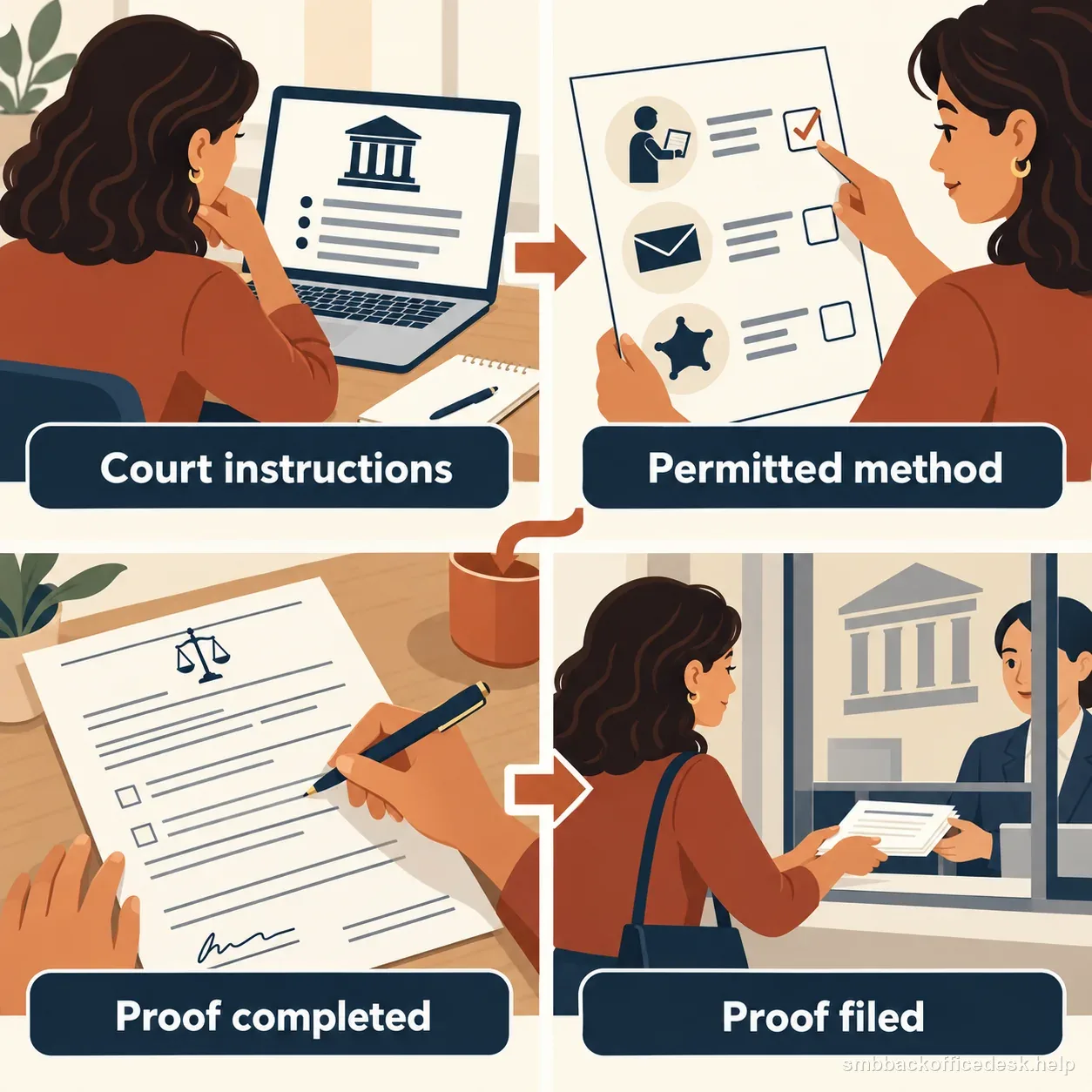
A service workflow checks the court instructions, uses a permitted service method, completes the proof, and files it.
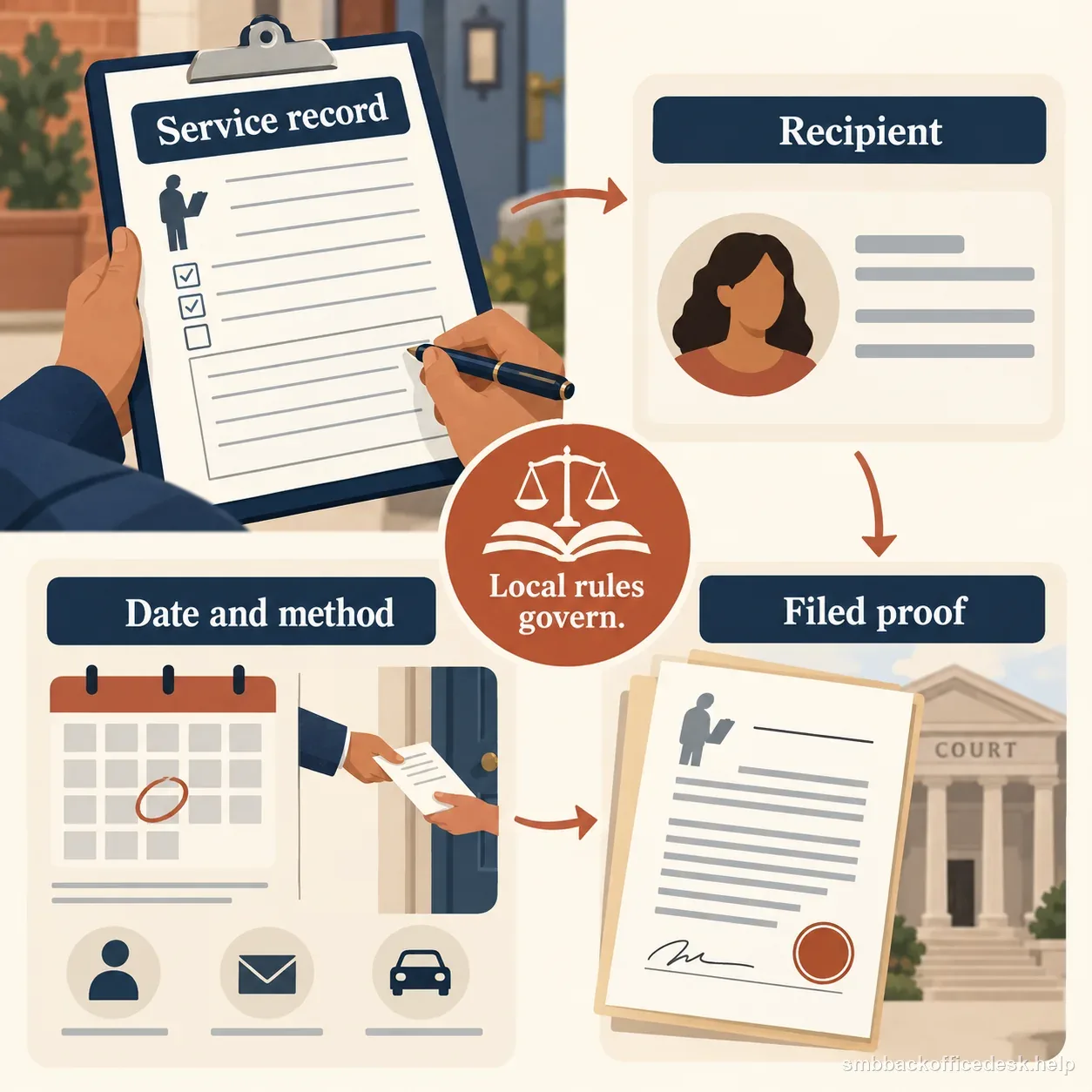
A service record documents the recipient, date and method, and proof filed with the court; local rules govern.
Proof of service must match what actually happened
The server—not the plaintiff—typically completes the proof form for the act of service. Compare the return with the filed claim and the server’s notes: case number, legal defendant, service address, date and time, authorized method, recipient and that person’s role, plus the server’s signature. If the method required a follow-up mailing, confirm the return records that step too.
File the proof by the court’s deadline and keep the filed copy with the hearing packet. California’s current small-claims instructions say to file the original and a copy at least five days before the hearing; treat that as a California example, because other courts set their own deadlines. If the form says personal service but the papers were left with another employee, ask the server and clerk how to correct or redo it before relying on the return. Never edit a server’s signed statement yourself; the record should report what actually happened.
Certified mail is not universally interchangeable with service
A tracked demand letter can prove notice, but it is not automatically valid lawsuit service. Even where certified mail is permitted, the court may require the clerk to send it or a particular person to sign.
California warns that its clerk-certified-mail method can fail when someone else signs or the signature cannot be verified. Follow the result, not just the tracking page.
| Demand letter | Formal service | |
|---|---|---|
| Purpose | Pre-suit communication | Notice under court rules |
| Sender | Business may send | Authorized server/method may be required |
| Proof | Mail or email record | Compliant proof form and filing |
What to do when service fails
Contact the clerk or use the court’s published procedure to request more time or a new hearing date if available. Recheck the defendant’s current address and registered agent.
Do not appear at the hearing assuming the judge will ignore failed service because the defendant “obviously knows.” Due process is part of the case.
A clean service file contains the correct defendant identity, official rule, attempt history, completed proof, and any continuance paperwork. That file should be ready before you spend time rehearsing the merits.
Preserve a dated record when agent information changes
A registry search is a starting point, not permission to choose any person at that address. Save a dated copy of the official entity record and give the server the exact recipient and location allowed by the court’s rule. If the listed agent or address changes between filing and the attempt, check the current record again and ask the clerk or small-claims adviser which date controls; do not assume an old invoice address, a former agent, or a manager is an acceptable substitute.
If the entity is dissolved or has no usable agent, stop and verify the jurisdiction’s official procedure for that situation. Some courts require a motion, another authorized recipient, or a new hearing date. A process server’s failed-attempt log can support a request, but it does not by itself authorize substituted service. Keep the dated registry result, attempt reports, clerk guidance, and any court order together so the service timeline can be explained.