A not-as-described chargeback asks whether the item or service differed from what the customer agreed to buy, or arrived defective. The useful response is a transaction-specific comparison: the exact purchase-time representation, the buyer’s selection, what the business supplied, and how it handled the complaint. A tracking scan proves a parcel moved; it does not by itself prove the right model, condition, quantity, or service was supplied.
Start with the reason and network shown in the processor’s notice. Visa, Mastercard, and each acquirer use their own procedures, evidence fields, and deadlines. This guide explains how to assemble a clear record; it cannot predict an issuer’s decision. For the overall submission workflow, see the chargeback response overview and the small-business evidence checklist.
Freeze the buyer-facing description
Save the sales page, proposal, menu, specification sheet, or scope version that applied to this order. Capture the item or service identifier, selected variant, condition, dimensions, material, compatibility, included components, relevant photos, delivery claims, and return terms. Preserve the checkout selection, accepted terms, quote, and approved change orders with the transaction record.
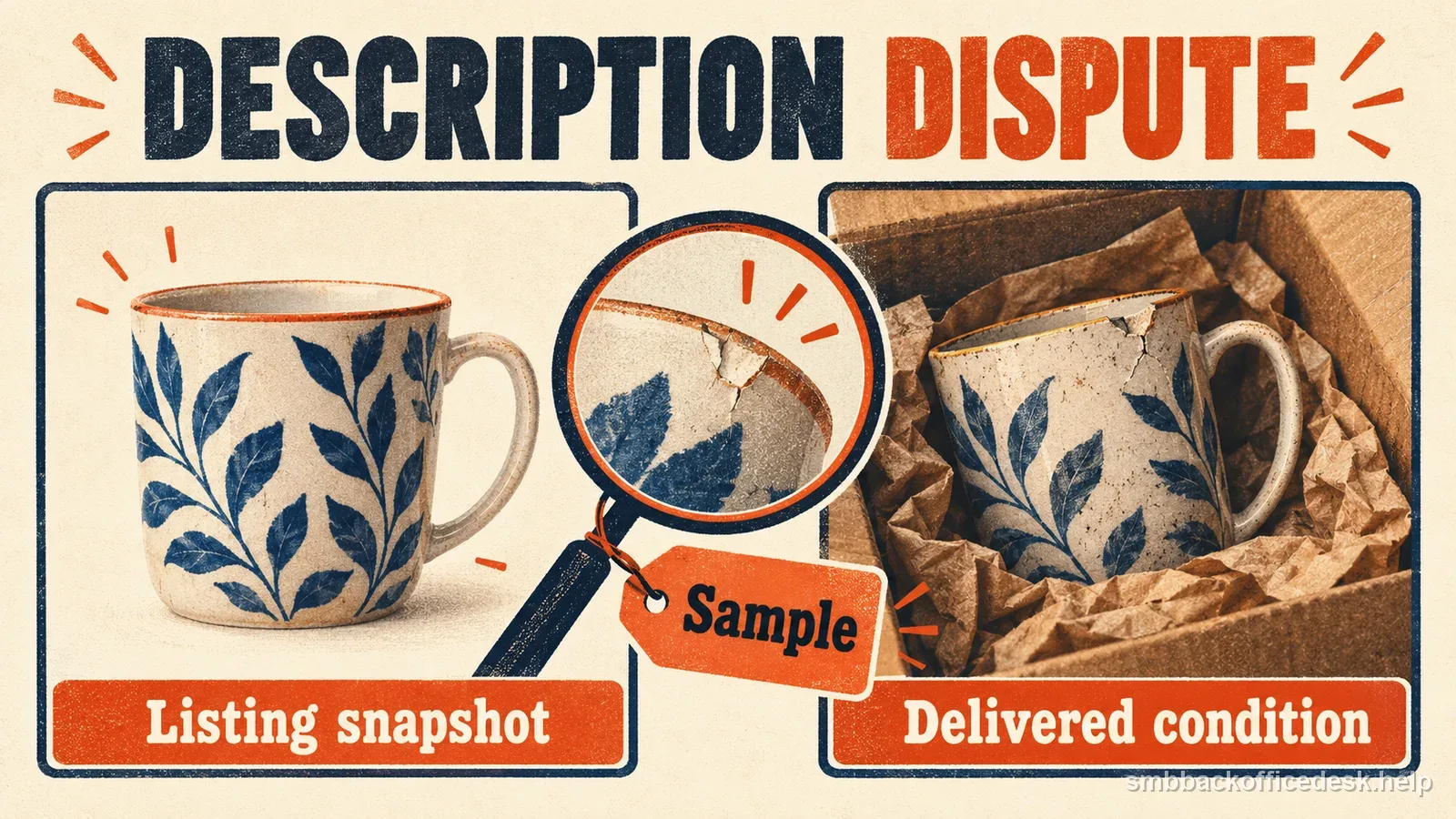
If the page changed after purchase, use a dated CMS revision, catalog export, archived snapshot, accepted proposal, or order confirmation to establish the earlier version. A screenshot of today’s page proves what you say now, not what this buyer saw then. Keep the page version and order timestamp together. If the customer selected one option from several, preserve the selection itself instead of asking the reviewer to infer it from a general product page.
Define the exact mismatch before gathering proof
Write the allegation in one factual sentence using the customer’s wording: “the selected blue jacket arrived in black,” “the package promised four sessions but only two occurred,” or “the equipment was listed as new but arrived refurbished.” Preserve the issuer’s claim and the customer’s complaint, then identify the single attribute that must be compared. Do not answer a delivery complaint with quality records or a fraud allegation with an unrelated product brochure.
Separate a preference change from a concrete representation difference. “I do not like the color” is not the same allegation as “I selected navy and received black.” Likewise, “the service was disappointing” needs to be translated into the promised feature, deliverable, date, or acceptance criterion the customer says was missing. Do not reword a valid defect into a vague preference merely to strengthen the merchant’s position.
If the complaint is accurate, consider accepting the dispute or using the processor’s permitted resolution path. A valid return, refund, or consumer remedy is not defeated simply because an internal “no refunds” policy exists. Check applicable law, the actual terms accepted, and network/processor rules before treating a policy as controlling.
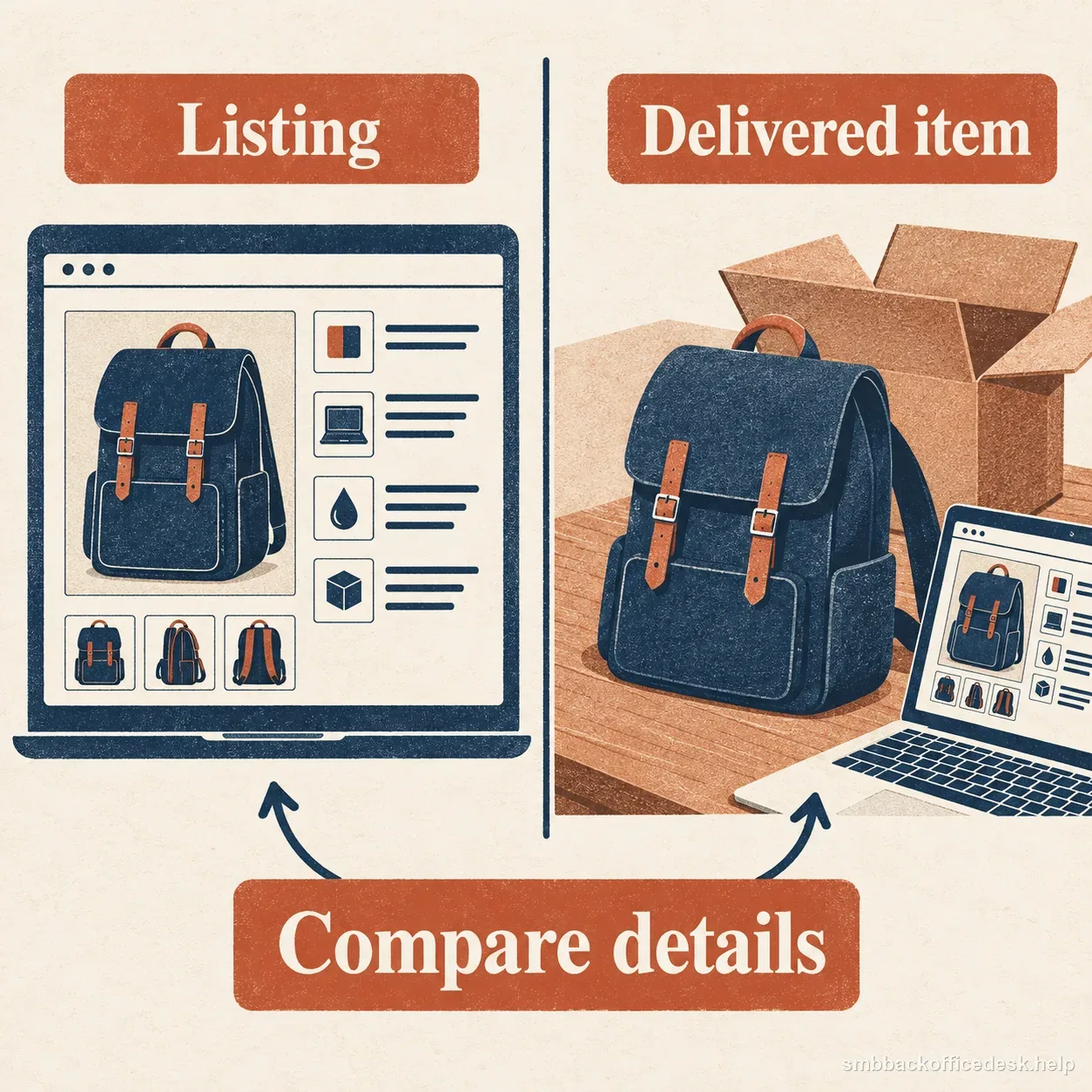
Start with the exact purchase-time listing and the item record tied to this order.
Match the fulfilled item or service to the promise
For goods, connect the order line to the item actually picked and shipped: SKU or serial number, condition/inspection record, packing or pre-shipment photos, and any function or quality test relevant to the allegation. Tie each photo or log to the order identifier and date; a generic catalog image does not establish which unit went into this shipment. For a color or size claim, include the buyer’s selection and the fulfillment scan in the same comparison. For a “new” or authenticity claim, use the records that actually establish the unit’s condition or provenance; avoid unsupported labels.
If the buyer returned the item, document the date received, return tracking if available, and its condition before it is altered or restocked. Compare serial numbers, components, or damage only where the records support that comparison. Do not guess about the customer’s intent or treat a return as proof that the complaint was false.
For services, use the signed scope and approved changes, schedule, attendance or work log, deliverable, acceptance message, and revision or cure history. Identify the disputed milestone or service period rather than relying on an annual contract to prove a particular month’s work. Where quality is subjective, show objective specifications, test results, and the actual deliverable instead of asserting that the work was excellent. A meeting invitation proves it was scheduled; pair it with attendance or work evidence if the dispute is about whether the service happened.

A customer’s report should be evaluated alongside the specific order and condition records, without assuming either side is correct.
Document the return, repair, or replacement path
Show the return terms the customer accepted and where they appeared at checkout, then assemble any return authorization, customer request, instructions, tracking, refund record, replacement shipment, repair, troubleshooting, and follow-up. Make the sequence easy to follow: complaint received; merchant response sent; remedy offered; customer accepted, declined, or did not respond; and final disposition. Include dates and the communication channel.
Visa’s public April 2026 rules describe condition 13.3 as “Not as Described or Defective Merchandise/Services.” Its response-processing requirements call for evidence that the merchandise or service matched its description or was not damaged/defective, plus a rebuttal to the cardholder’s claim; where applicable, the rules also address whether the cardholder tried to return the merchandise or whether a return has not been received. The exact case path and eligible evidence still depend on the network, region, acquirer, and dispute stage, so use the notice and processor’s current instructions rather than assuming every case follows Visa’s wording.
If the buyer declined a proposed cure, preserve the dated offer and response. If a returned item arrived, photograph its condition and connect the image to the order and serial number before alteration. If the business never received an item, retain the return authorization, instructions, tracking information, and follow-up showing that fact. Do not frame silence as agreement unless the applicable process supports that conclusion.
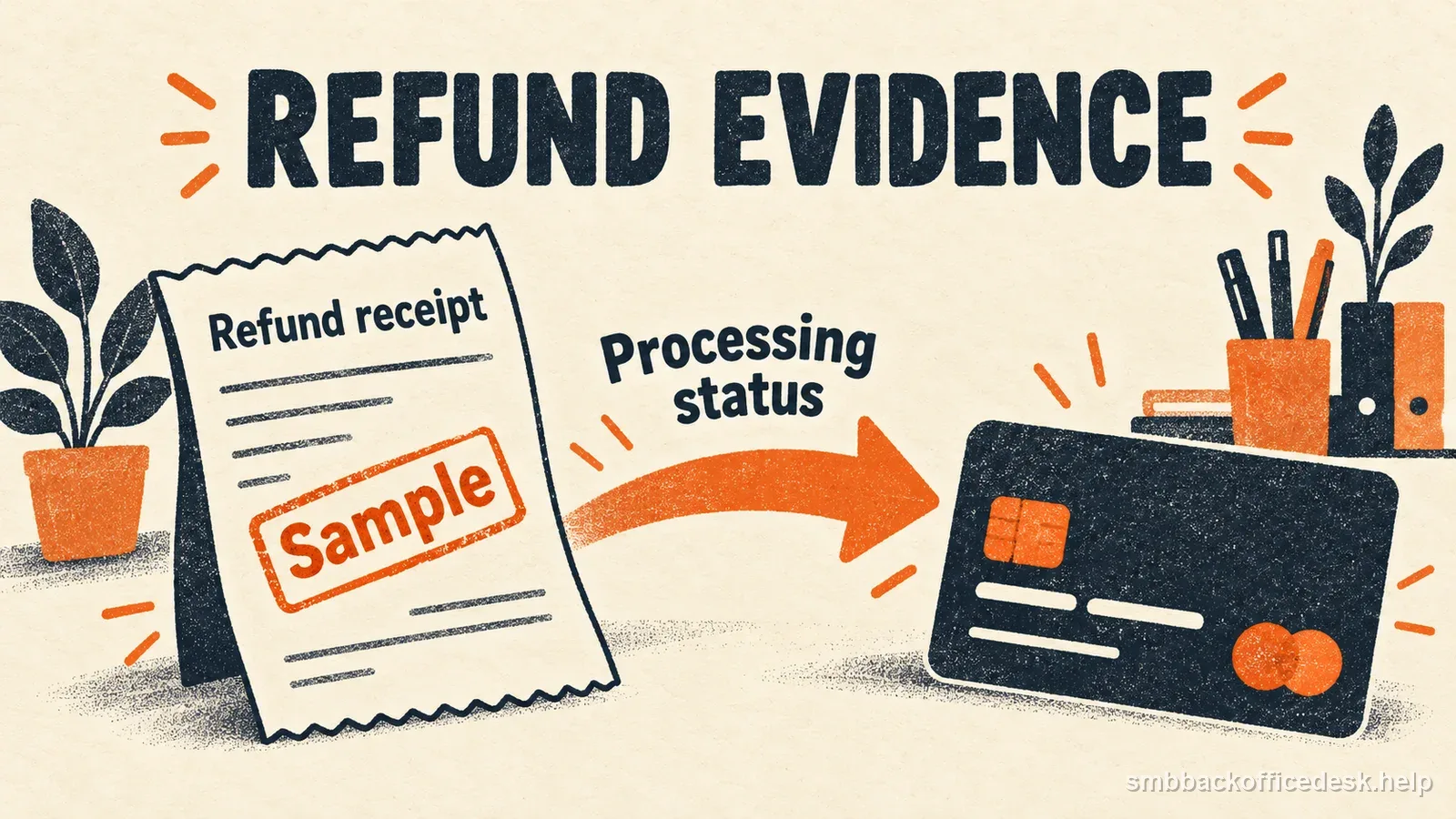
Do not rely on a “no refunds” policy as proof that a materially misdescribed product was acceptable. If a return or repair right applied and the merchant refused it, that record may support accepting the chargeback. A refund already issued should be matched to the amount and date; ask the processor how to report a credit so the customer is not credited twice.
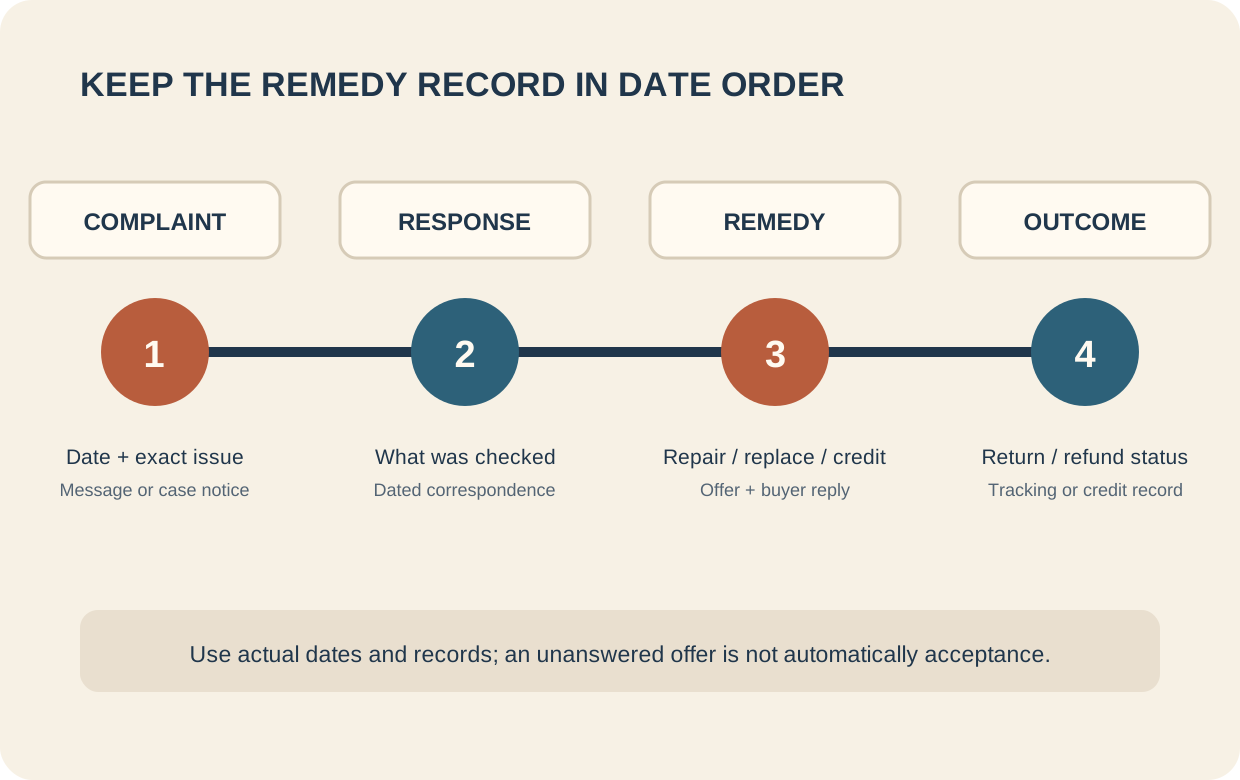
A dated sequence makes the complaint, merchant response, proposed remedy, and final return or refund status easy to follow.
Separate partial disputes from the rest of the order
If a multi-item order contains one defective item, reconcile the disputed amount to that line and show any partial refund. For a project, separate the disputed milestone from completed and accepted work. A proportional calculation can be simple: $240 disputed line − $40 credit already issued = $200 still in question. Label the amounts as an example, tie real numbers to the order and credit record, and follow the processor’s permitted response fields. Do not claim the undisputed balance proves the challenged item was correct.
| Disputed attribute | What was represented | What was fulfilled | Evidence to tie to it |
|---|---|---|---|
| Size or dimensions | Listed dimensions or selected size | The size actually picked and shipped | Order line and SKU scan |
| Condition (for example “new”) | Condition stated at purchase | The unit delivered | Serial number and inspection record |
| Service feature or scope | Promised feature, sessions, or deliverable | Work actually delivered | Signed scope, file, or dated session log |
| Variant (for example color) | Checkout selection | Variant fulfilled | Selection record and pre-shipment photo |
Build a concise, reviewer-ready packet
Use one row for each disputed attribute: what was represented, what the buyer selected or approved, what was fulfilled, the evidence tied to it, the complaint, and the response or remedy. Label every record with its source and date. A short opening statement should name the allegation, state the specific comparison, point to the strongest supporting records, and identify any credit or cure already provided. It should not accuse the customer or repeat the entire sales history.
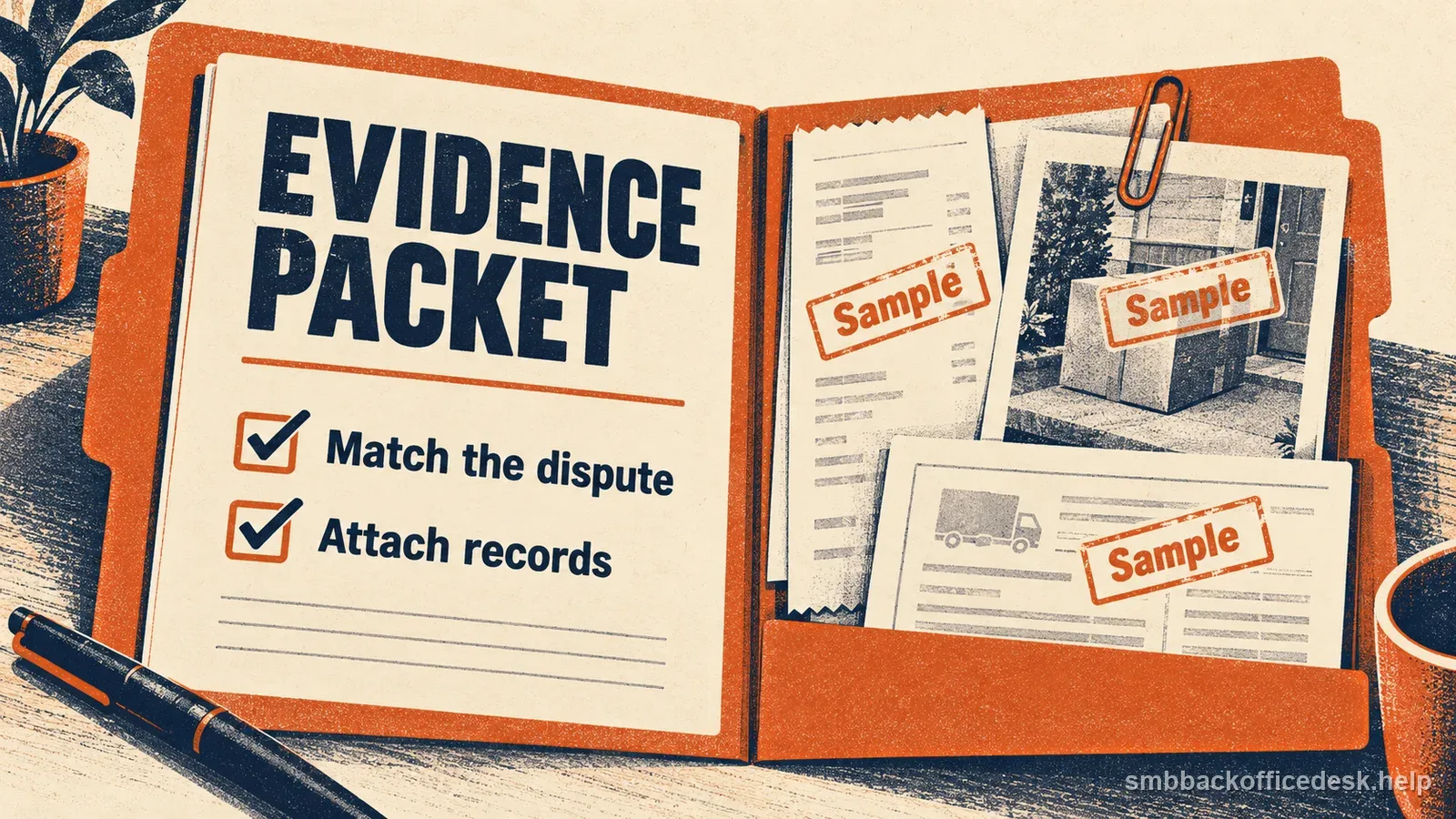
A practical sequence is: (1) the transaction and issuer reason; (2) the dated listing or scope and checkout selection; (3) fulfillment records tied to the item or service period; (4) the customer’s complaint; (5) the return, repair, replacement, or refund timeline; and (6) a compact rebuttal with exhibit references. Upload legible, cropped records in the processor’s requested format. Use a relevant excerpt rather than an unfiltered inbox or full customer file.
Before submission, check that each statement in the rebuttal points to a page or record; the dates agree; the amount reconciles; and the evidence addresses the actual reason code. Remove duplicate screenshots, unrelated delivery scans, internal speculation, and personal information that is not needed. Keep original exports securely in case the processor asks for them. Follow the processor’s deadline and file-size rules; an otherwise useful record can be excluded if it arrives late or in an unsupported format.

Keep the dated listing, order, fulfillment, and customer messages linked to the same transaction.
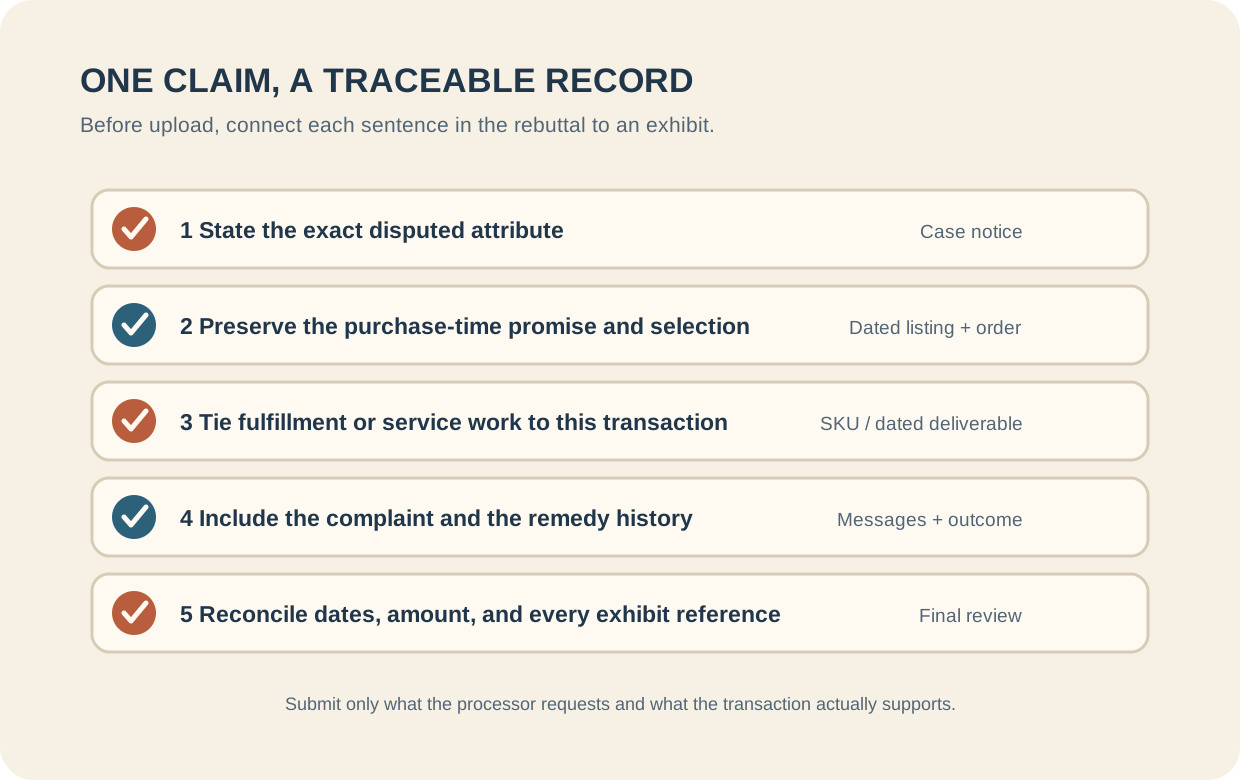
A short allegation-to-record checklist helps remove unrelated screenshots and unsupported statements before submission.
| At purchase | At fulfillment | |
|---|---|---|
| Goods | Order-time variant/spec | SKU or condition record |
| Service | Accepted scope | Deliverable/milestone evidence |
| Complaint | Disputed attribute | Cure or return outcome |
Prevent the next mismatch
Track disputes by SKU, product page, salesperson, service package, and return reason. If buyers repeatedly misunderstand the same size, material, compatibility, renewal term, or scope, correct the sales representation and checkout flow. Keep revised content tied to its effective date so future evidence can show what a later buyer saw. For custom services, require a written scope and acceptance criteria before work begins.
A sound response demonstrates a match between the actual purchase-time promise and delivery, or candidly identifies why the buyer’s complaint is valid. It gives the reviewer a short path from the allegation to the records. It does not ask them to decide that the customer is unreasonable.