A B2B lead list can create a narrow exception from the federal National Do Not Call (DNC) provisions, but it does not grant blanket permission to call or text every number. The result depends on what the call solicits, whether the number is treated as a consumer or business number, the technology and message used, and applicable state law. Keep those checks separate.
Start with the purpose and recipient
Under the FTC Telemarketing Sales Rule (TSR), most calls soliciting a business transaction from a business are exempt from the TSR’s National DNC Registry provisions. A call to an employee to sell something for that employee’s personal or household use is not treated as a B2B solicitation just because it reaches a workplace. The exception is about the transaction being solicited, not merely the contact’s job title or the label in a lead database.
The FTC’s DNC rules and the FCC’s TCPA restrictions are different legal checks. Passing one does not answer the other. Keep a record of the offer, recipient context, number source, dialing method, message type, and any consent or stop request.
| Check | What it decides | What to record |
|---|---|---|
| FTC Telemarketing Sales Rule and National DNC provisions | Whether the National DNC registry rules reach the call, which turns on the transaction being solicited and the recipient context | The offer, the recipient context, and where the number came from |
| FCC TCPA rules | Consent for calls and texts to wireless numbers made with an automatic telephone dialing system or an artificial or prerecorded voice | Line type, dialing method, message type, consent, and any stop request |
| State law | Registration, calling hours, consent, disclosure, and do-not-call rules that go beyond the federal rules | The recipient's state and a current state-law matrix |
| Office-supplies provision | Limited TSR treatment for calls selling nondurable office or cleaning supplies to businesses | Confirmation that the product fits and the call is not an employee buying for personal use |
| CAN-SPAM | Commercial email, which is checked separately from calls and texts | Channel-specific consent, opt-out, and suppression records |
A mobile number does not automatically erase the B2B DNC exception
Do not classify a call as consumer solicitation solely because a business contact answers on a mobile phone. The DNC analysis turns on the call’s purpose and the subscriber/recipient context. The FCC’s consumer DNC protections can cover residential and wireless numbers, while business calls are generally outside the National Registry rules; a home-based or mixed-use number can require a fact-specific review. A “business” label in an enrichment file is not enough to establish that context.
Mobile status still matters for the separate TCPA review. Verify line type and recipient context when you can; if either is unknown, route the record for review before using automated or prerecorded outreach.
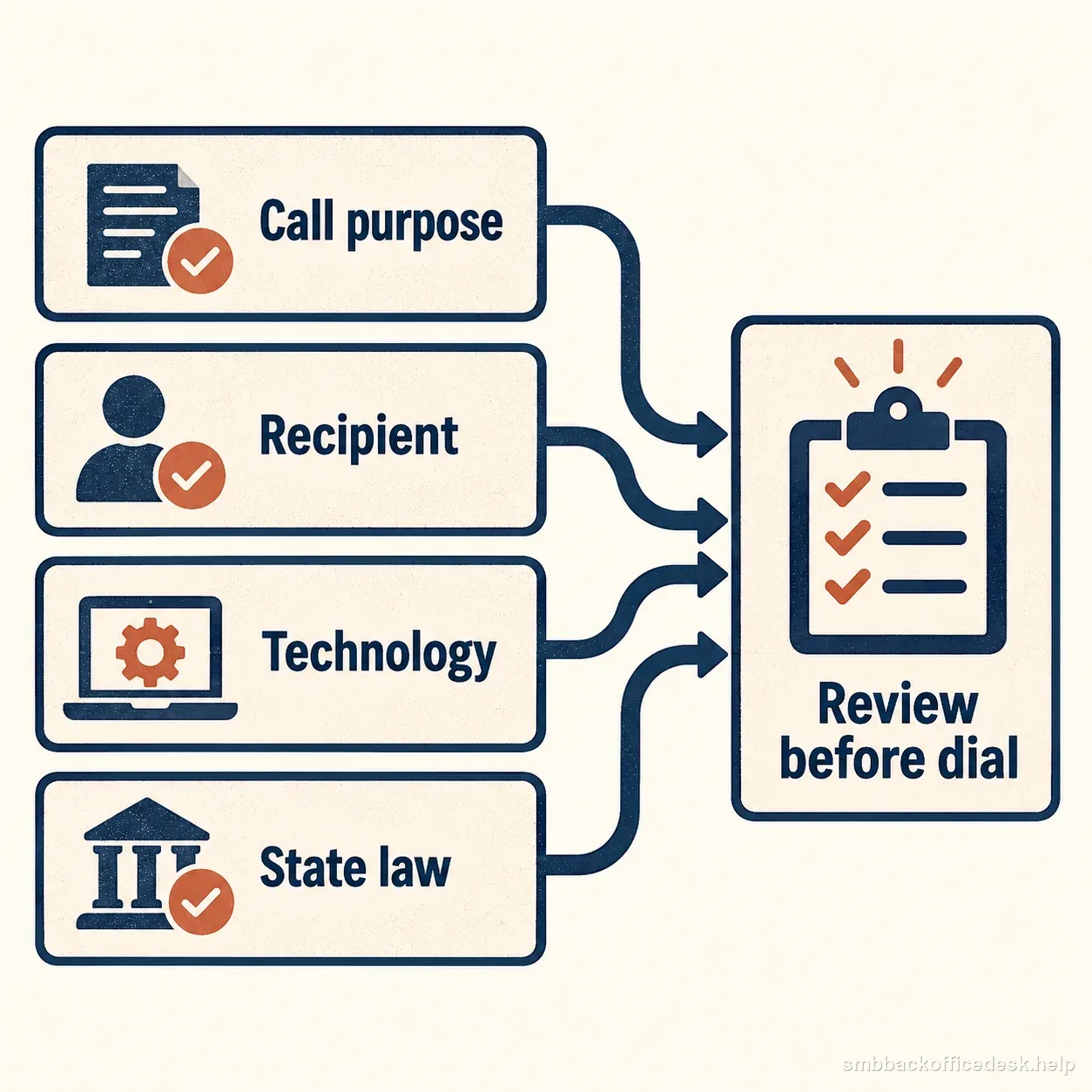
Separate call purpose, recipient, technology, and state-law checks before outreach.
Check the TCPA by technology and message type
The TCPA restricts certain calls to wireless numbers made with an automatic telephone dialing system (ATDS) or an artificial or prerecorded voice. Marketing calls using an ATDS or artificial/prerecorded voice generally require prior express written consent where the statute and FCC rules require it. Prerecorded telemarketing calls also have specific restrictions. Text messages sent using an ATDS are treated as calls for TCPA purposes, but do not assume that every manually sent text has the same federal consent rule; state laws and other requirements may still apply.
“Power dialer,” “predictive dialer,” and “automated” are product labels, not a legal conclusion. In *Facebook v. Duguid*, the Supreme Court held that an ATDS must use a random or sequential number generator to store or produce telephone numbers. Have counsel assess the actual system, configuration, number source, and message flow before launching a campaign. Do not infer consent obligations from the tool’s marketing name alone.
Check state law for the recipient’s location
States can impose registration, time-of-day, consent, disclosure, or do-not-call requirements beyond the federal rules, and definitions and business exceptions differ. Do not rely on a generic claim that a particular state either follows or rejects the federal B2B exception. Maintain a current state-law matrix for the states you call, based on primary law or qualified counsel, and check both the call’s purpose and technology against it. Recheck the matrix before expanding into a new state.
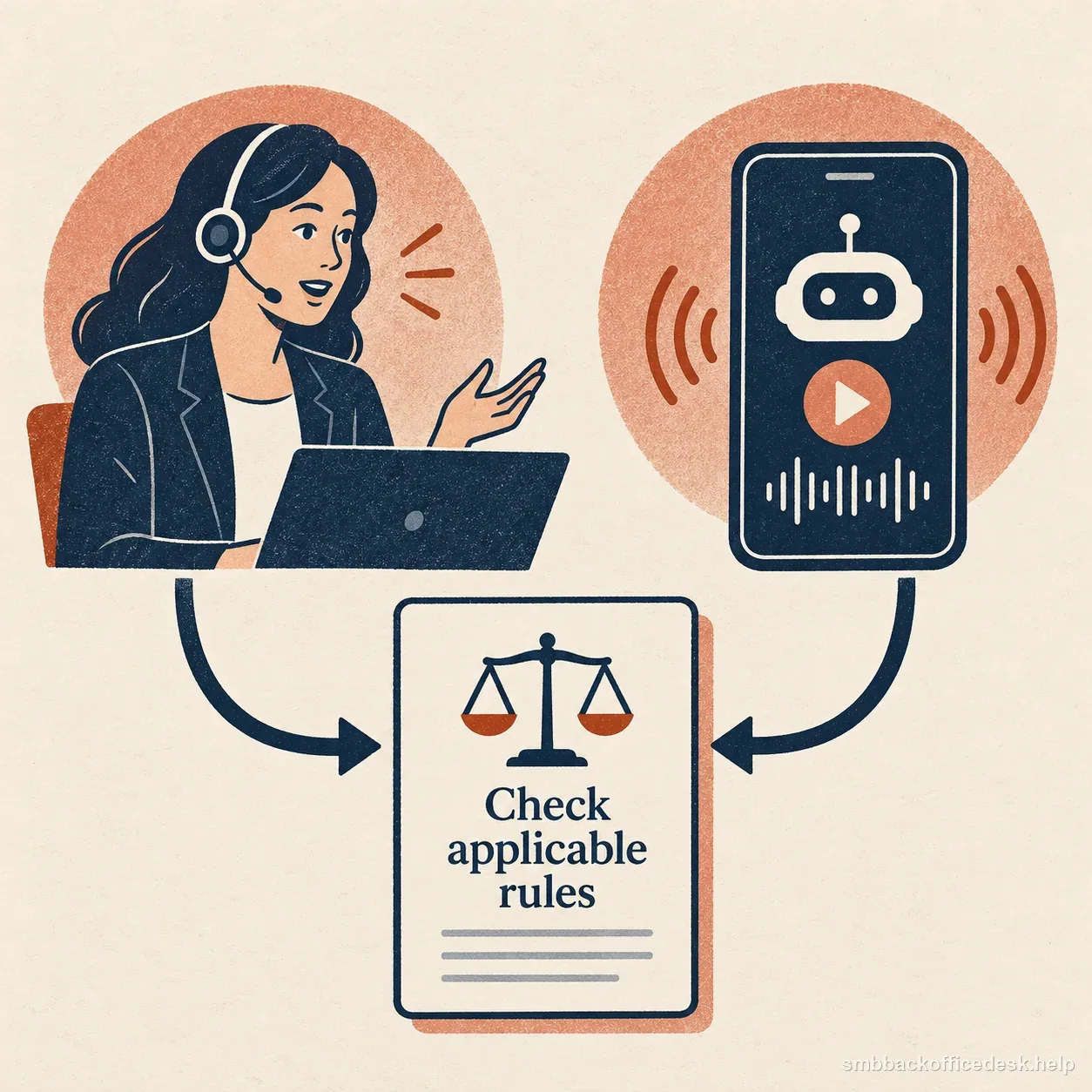
A live agent and an automated or prerecorded message can trigger different checks; confirm the rules for the campaign.
Calling hours and disclosures depend on the rule that applies
The TSR’s 8 a.m.–9 p.m. local-time restriction and required disclosures apply to covered telemarketing calls; they are not a universal federal rule for every genuine B2B call. FCC and state rules can add separate limits. Identify the applicable rule before setting a campaign window. For calls covered by the TSR, make the required seller and sales-purpose disclosures promptly and follow the other applicable TSR requirements.
The office-supplies provision is a limited exception
The TSR has special treatment for calls selling nondurable office or cleaning supplies to businesses. Such calls are not exempt from most TSR requirements, but the FTC says they remain exempt from the TSR’s National DNC provisions and recordkeeping requirements. The provision is narrow and does not create a general exemption for other B2B products. A call soliciting an employee to buy supplies for personal use is not a business-to-business call.
Build a reviewable calling workflow
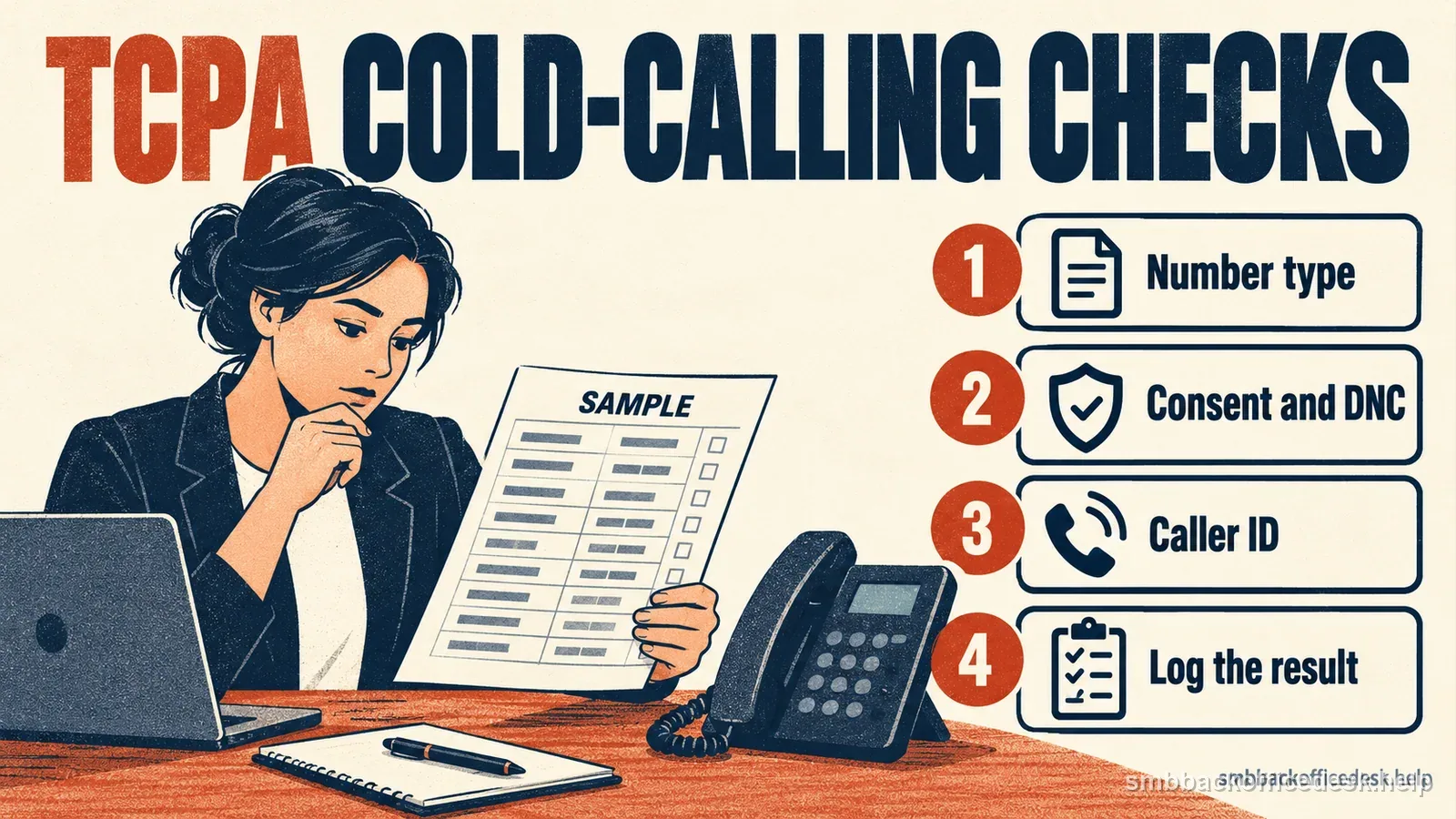
Before a campaign, record four things for each lead: the transaction being solicited, whether the number is business/residential/wireless/unknown, the dialing and messaging method, and the recipient’s state. Apply the relevant federal and state checks to that combination. For covered TSR calls, use a DNC list version refreshed within the required 31-day period and honor applicable registry rules. Maintain and honor opt-out and stop requests; a company-wide suppression policy is a useful control, while the legal duty depends on the rule covering that contact.
Keep evidence of consent where required, the system configuration, list source, disclosures, and suppression activity. Do not treat a purchased list, a “business phone” tag, or a vendor’s compliance claim as proof that every contact is cleared.
Handle unknown line types conservatively
Enrichment vendors may omit or misclassify whether a number is landline or wireless. Mark unknown values as unknown instead of silently converting them to “landline.” Verify the number and recipient context, or hold the lead out of automated/prerecorded campaigns until reviewed. A conservative review step prevents a data-field guess from becoming the basis for a consent decision.
Scale raises the cost of a mistaken rule
TCPA and state-law exposure can be assessed per call or text, and a repeated campaign can multiply the number of challenged contacts. Penalty amounts, available claims, and defenses depend on the law and facts. Have counsel review the actual campaign design and current state requirements before sending at scale rather than relying on a generic per-message estimate.
Cold email and cold calling use separate checks
Commercial email is governed primarily by CAN-SPAM, while calls and texts may trigger the TSR, TCPA, FCC rules, and state telemarketing laws. Clearing a contact for email does not clear the phone number for calls or texts. Keep channel-specific consent, opt-out, and suppression records for each contact.
| Cold email | Cold call or text | |
|---|---|---|
| Primary framework | CAN-SPAM opt-out and sender rules | TCPA consent and calling rules |
| Clearance | Email eligibility | Does not automatically clear phone/text |
| Workflow | Track email suppression | Track line type, consent, method, and opt-out |
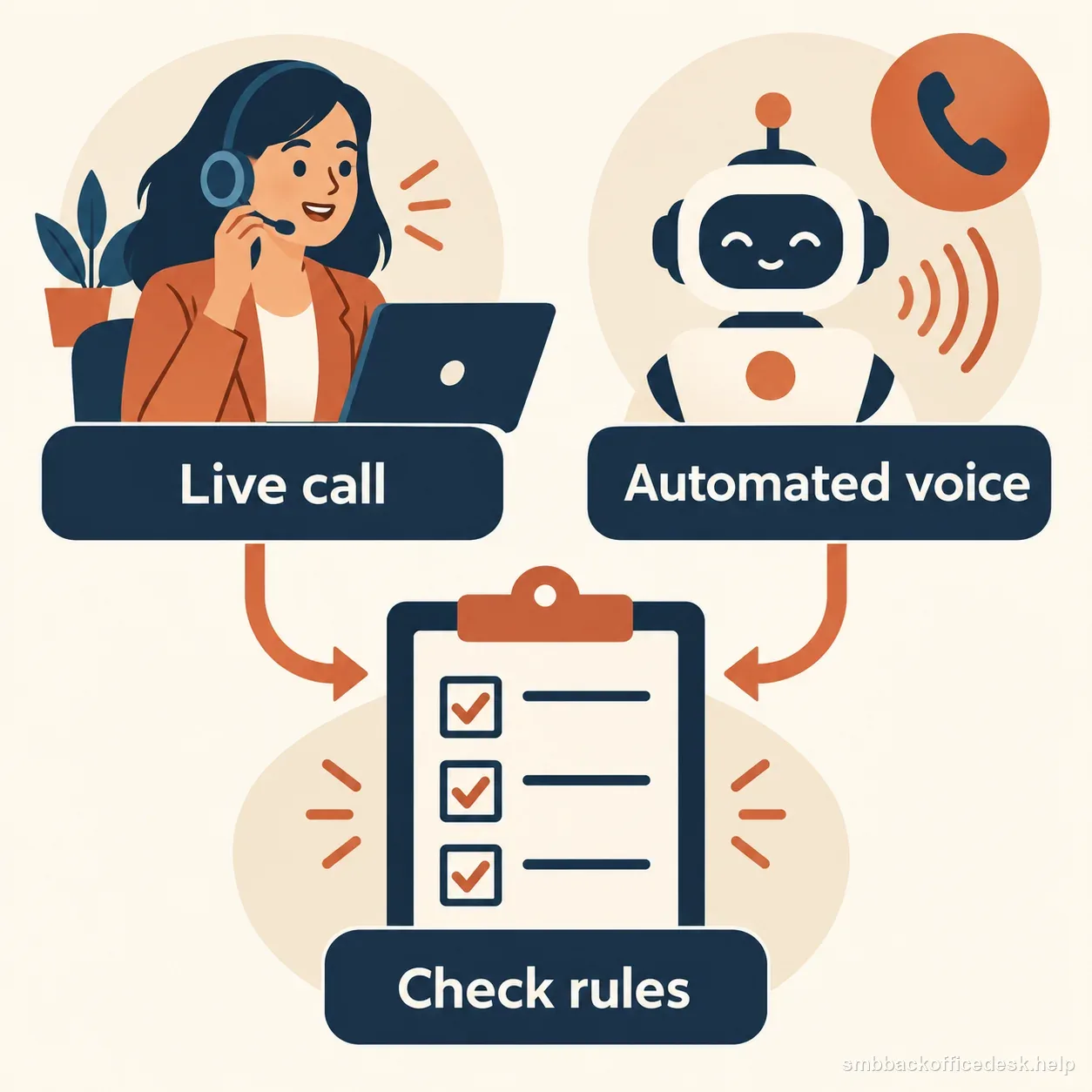
A live-agent call and automated voice campaign lead to a check of the rules that apply before outreach.
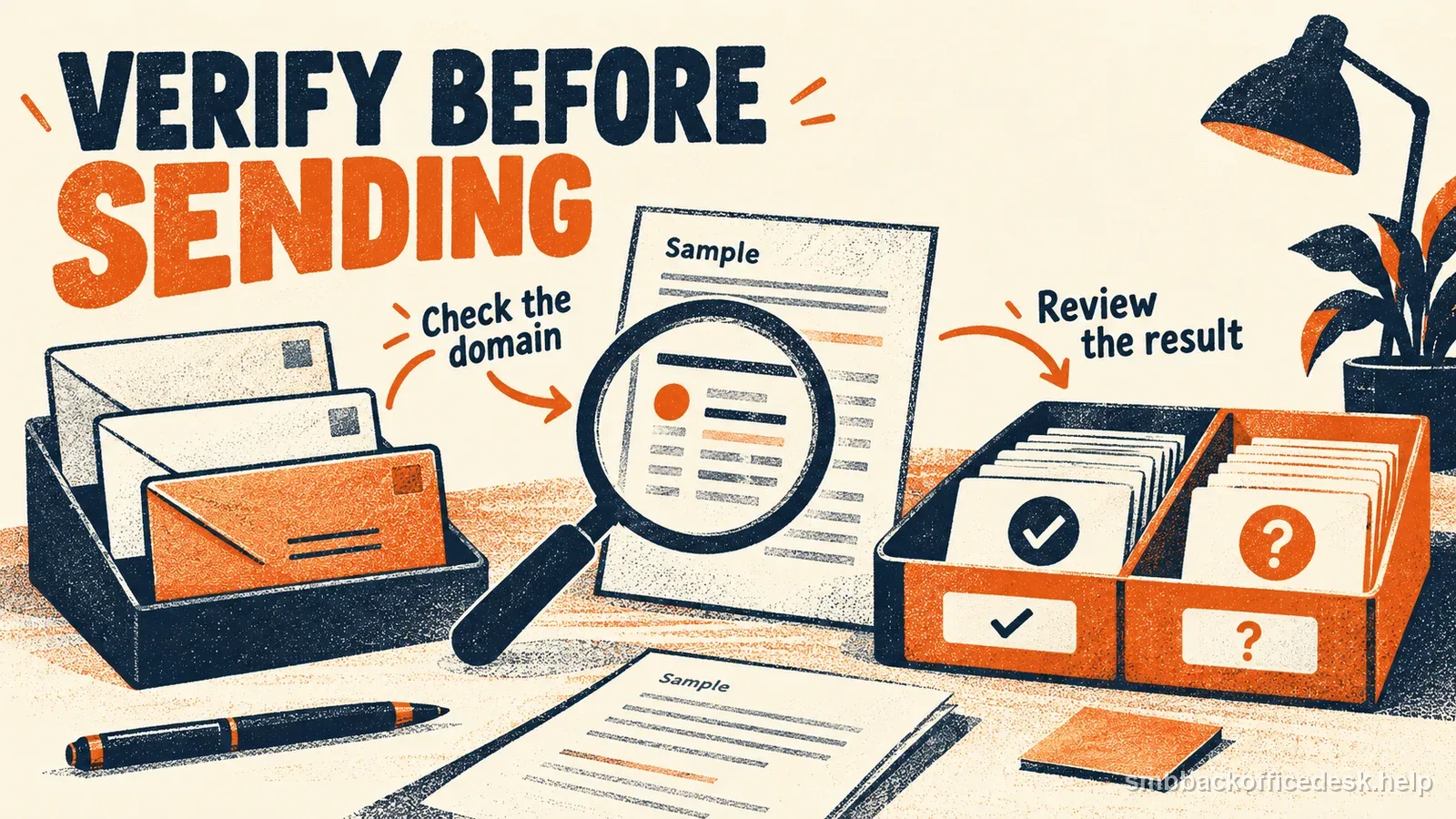
Run a sample batch through separate compliance gates
Before a campaign, test the intake workflow on a small, recorded sample rather than treating a vendor's “B2B” label as clearance. For example, an illustrative 40-row import might contain 14 numbers confirmed as direct company lines, 9 known mobile numbers, 10 records with unknown line type, 4 numbers already on a suppression list, and 3 duplicate records. Those bins total 40. The 14 direct lines still need a purpose, recipient, dialing-method, state, and current-rule review; they are not automatically approved. The 9 mobile and 10 unknown records should stay out of automated or prerecorded campaigns until the applicable consent and technology questions are resolved. Preserve the 4 suppressions across import and merge, and remove the 3 duplicates before counting reach.
This is an invented operations example, not a legal statistic. Its arithmetic is a control check: 40 imported rows − 4 suppressed − 3 duplicate rows = 33 unique, unsuppressed records for further review, of which 19 still need line-type or method follow-up. Record who cleared each gate and the evidence used. A vendor certificate, area code, or business name alone does not answer whether a particular call or text is allowed.
Use the sample to test the rules engine before enabling any dialing sequence: verify that the suppression flag survives re-import, unknown values route to a hold queue, a live-agent call is distinguished from an automated or prerecorded message, and the applicable federal and state checks are recorded separately. Review a small manual sample after the first run and stop the campaign if the system silently converts unknown records into an approved category.